Understanding It and Why It Matters in China-to-USA Shipping
In the complex world of international logistics, particularly between China and the United States, efficiency and compliance are the keys to successful operations. One term that has increasingly become important in the freight and supply chain industry is the “5H Inspection.” As cross-border trade continues to expand, especially with e-commerce and high-volume freight between China and the US, understanding what 5H inspection is — and why it matters — is essential for importers, exporters, freight forwarders, and logistics managers.

In this article, we’ll explain:
- what 5H inspection means,
- how China-to-USA freight logistics operate today,
- the challenges and risks involved, and
- the key advantages offered by BRF Logistics in handling international shipments with 5H compliance.
What Does “5H Inspection” Mean?
The term 5H inspection refers to a systematic pre-shipment quality control procedure that reviews five critical aspects of cargo before export. While the exact interpretation of each “H” can vary slightly depending on industry or provider, it generally covers the following key checkpoints:
- Hardware (Physical Condition)
Ensuring that the physical products, packaging, and labeling meet buyer specifications and international shipping standards. - Height/Head Measurement (Dimension Accuracy)
Verifying that the dimensions and volume of the goods are correct — essential for calculating freight charges and ensuring proper container utilization. - Hazard Identification
Detecting any hazardous materials or components that might affect shipping permits, safety certifications, or legal compliance, especially with US customs and transport regulations. - Harmonization (HS Code Review)
Confirming the correct Harmonized System (HS) tariff codes — a standardized classification used worldwide to determine duties, taxes, and regulatory clearance. - Health / Hygiene / Handling Standards
For relevant products like food, cosmetics, medical items, and consumer goods, checking for proper hygiene, certification, and storage conditions required for safe transport and customs clearance.
The fifth “H” often reflects different quality criteria depending on goods characteristics — such as humidity control, health documentation, handling requirements, or hazardous-to-transfer indicators. What unifies all interpretations of 5H inspection is risk mitigation: ensuring goods are compliant, correctly classified, and ready for smooth clearance upon arrival.
Why Is 5H Inspection Important in China-to-USA Freight?
The logistics flow between China and the United States is one of the largest and most complex in global trade. Tens of thousands of containers move annually via sea, air, and rail — covering consumer goods, industrial components, electronics, apparel, auto parts, and more.
However, this volume of trade brings several challenges:
1. Customs Complexity and Regulation
US customs authorities enforce stringent entry requirements. Improper documentation, incorrect HS codes, or hazardous declaration errors can result in goods being:
- held at the port,
- fined or penalized,
- subject to re-inspection,
- delayed for weeks or even months.
A thorough 5H inspection ensures that goods comply with customs and regulatory expectations before they leave China, significantly reducing the risk of costly customs rejections in the US.
2. Freight Cost Optimization
Shipping costs are calculated based on actual vs. dimensional weight, container utilization, and correct cargo classification. Mistakes in measurements or misreported dimensions often lead to:
- unexpected freight surcharges,
- container inefficiencies,
- cargo adjustments mid-shipment.
By verifying dimensions (the second “H”), companies can plan container loading more efficiently, saving potentially thousands of dollars per shipment.
3. Product Quality and Buyer Satisfaction
For B2B importers and e-commerce sellers, product defects or mismatches upon arrival can be disastrous. 5H inspection helps ensure:
- items ordered match the specifications,
- packaging protects goods during transportation,
- labeling conforms to import standards.
This not only protects supply chains but also preserves brand reputation and decreases returns.
China-to-USA Shipping Today: Overview of the Logistics Landscape
Today, freight between China and the US operates through multiple channels:
การขนส่งทางทะเล
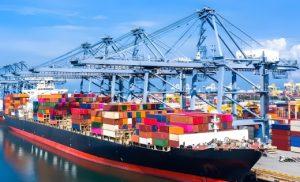
The dominant mode for heavy shipments, with major ports such as:
- Shanghai,
- Ningbo,
- Shenzhen,
- Qingdao,
linked to US ports like Los Angeles, Long Beach, Seattle, and New York.
Sea freight is economical but requires meticulous planning due to container schedules, port congestion, and customs documentation.
การขนส่งทางอากาศ
Used for urgent, lightweight, or high-value cargo. Air freight is fast but costly — making accuracy in inspection and documentation even more critical to avoid costly delays.
Rail + Intermodal
Emerging options such as rail from China to Europe have less impact directly on US trade, but intermodal combinations continue to grow in complexity as global supply chains evolve.
Regulatory Environment
Trade policy, tariff updates, and customs enforcement have fluctuated in recent years. Increasing nonscompliance penalties, heightened safety standards, and stricter documentation reviews make proactive inspection like 5H increasingly necessary.
How BRF Logistics Enhances the 5H Inspection Advantage
To navigate this complex freight environment, many companies partner with trusted logistics providers. BRF Logistics stands out in international shipping due to several core advantages:
1. Integrated 5H Inspection Services
With trained inspectors and local partners in China, BRF Logistics conducts on-site checks that align with export regulations and US import requirements. This early inspection prevents customs issues and reduces delays at destination ports.
2. Comprehensive Documentation Support
BRF Logistics helps ensure that all export documentation — commercial invoices, packing lists, HS codes, certificates of origin, and hazardous declarations — are accurate and compliant. Correct documentation is half the battle in cross-border shipping, and BRF handles this proactively.
3. Smart Freight Optimization
By combining dimensional verification and cargo analysis, BRF Logistics advises on container type, space utilization, and routing strategy to reduce costs and improve delivery timelines.
4. Technology-Enabled Tracking and Reporting
Real-time shipment visibility is critical. BRF integrates digital tracking and reporting tools so clients can:
- monitor cargo in transit,
- access inspection reports,
- receive alerts on clearance statuses.
Transparency builds confidence and decreases surprises.
5. Customized Solutions for Diverse Industries
Whether it’s electronics, textiles, consumer goods, or industrial parts, BRF Logistics tailors inspection and logistics plans to each industry’s specific requirements — from hygiene and handling standards to hazardous material protocols.
In a global trade environment that is increasingly regulated and competitive, 5H inspection is not just a compliance checkpoint — it’s a strategic investment in supply chain performance. For companies shipping from China to the United States, adopting a thorough 5H inspection process can mean fewer delays, lower risk, better freight cost control, and higher customer satisfaction.
With expert logistics partners like BRF Logistics, shippers gain not only inspection accuracy but broader supply chain support — from documentation to routing, tracking, and delivery. In a world where every shipment counts, understanding and leveraging 5H inspection can be the difference between a smooth customs entry and a costly hold-up.