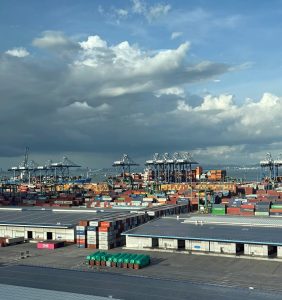
Perspectivas del mercado mundial del transporte marítimo de mercancías para septiembre de 2026
Información actualizada sobre el mercado basada en los datos disponibles entre el 20 y el 24 de agosto de 2026.
1. Las tarifas de transporte marítimo a nivel mundial no descenderán de manera uniforme
A fecha de 20 de agosto, el Índice Mundial de Contenedores de Drewry había registrado su tercera semana consecutiva de subidas, con un aumento de 4% respecto a la semana anterior, hasta situarse en 4.526 dólares estadounidenses por contenedor de 40 pies.
El aumento se debió principalmente al repunte de las tarifas en las rutas transpacíficas, mientras que las tarifas al contado desde China hacia el norte de Europa y el Mediterráneo siguieron ajustándose a la baja.
Teniendo en cuenta las condiciones actuales del mercado, es poco probable que las tarifas de transporte marítimo evolucionen en la misma dirección en todas las rutas comerciales en septiembre de 2026.
| Ruta comercial | Perspectivas para septiembre de 2026 | Factores principales |
|---|---|---|
| China – Costa Oeste de EE. UU. | Elevado y volátil | La demanda en temporada alta, las cancelaciones de travesías y la gestión de la capacidad |
| China – Costa Este de EE. UU. | Estable o ligeramente al alza | Reducciones de capacidad y recargos del Canal de Panamá |
| China – Norte de Europa | Estable a ligeramente más blando | Inicio de la temporada alta y mejora de la disponibilidad de plazas |
| China-Mediterráneo | Más moderado o con oscilaciones limitadas | Menor demanda y competencia entre transportistas en el sector del transporte de mercancías |
| Transatlántico | Relativamente estable | Cambios más equilibrados en la oferta y la demanda |
| Intraasiático | Aumentos localizados | Congestión en los transbordos y limitaciones de capacidad de los servicios de enlace |
Por lo tanto, es poco probable que el mercado en general durante el mes de septiembre se caracterice por una reducción generalizada de las tarifas de transporte.
La principal tendencia en septiembre será el endurecimiento de las tarifas transpacíficas, el descenso de los precios en la ruta Asia-Europa y la continuación de la gestión de la capacidad por parte de las navieras.
Índice Mundial de Contenedores de Drewry
2. De China a EE. UU.: las tarifas de transporte se mantienen en niveles elevados
Datos actuales del mercado
A fecha de 20 de agosto:
- De Shanghái a Los Ángeles: aproximadamente 6.802 dólares estadounidenses por contenedor de 40 pies, lo que supone un aumento de 9% respecto a la semana anterior
- De Shanghái a Nueva York: aproximadamente 9.507 dólares estadounidenses por contenedor de 40 pies, lo que supone un aumento de 9% respecto a la semana anterior
- La capacidad entre Asia y la costa este de EE. UU. se redujo en aproximadamente 9% con respecto a julio
- La capacidad entre Asia y la costa oeste de EE. UU. se redujo aproximadamente en 0,41 TP3T con respecto al mes anterior.
- Varias navieras han anunciado recargos relacionados con el Canal de Panamá para los servicios entre Asia y la costa este y la costa del Golfo de EE. UU., que entrarán en vigor en septiembre.
Estas cifras se basan en Análisis de mercado de Drewry del 20 de agosto.
Perspectivas para septiembre
Se prevé que las tarifas de transporte de mercancías entre China y la costa oeste de EE. UU. se mantengan elevadas y volátiles en septiembre.
Aunque la anticipación de pedidos absorbió parte del volumen habitual de la temporada alta a principios de año, la demanda de importaciones de EE. UU. no ha desaparecido tan rápidamente como se esperaba inicialmente.
Freightos informó de que las previsiones de importaciones minoristas de EE. UU. habían pasado de un fuerte pico en julio, seguido de un descenso significativo en agosto y septiembre, a un periodo más uniforme de demanda elevada que se prolongaría hasta septiembre.
Esto sugiere que algunos importadores estadounidenses siguen reponiendo sus existencias o tramitando los pedidos de la temporada alta más tarde de lo previsto.
Análisis de mercado de Freightos
Las rutas de la costa este y la costa del Golfo de EE. UU. podrían mantenerse más estables que los servicios de la costa oeste por varias razones:
- Restricciones de calado y peso de la carga en el Canal de Panamá
- Reducción de la capacidad entre Asia y la costa este de EE. UU.
- Nuevos recargos relacionados con el Canal de Panamá en septiembre
- Rotaciones de buques más largas y una rotación de la capacidad más lenta
- Los importadores están diversificando sus cargamentos, alejándolos de los puertos de la costa oeste de EE. UU.
BRF Logistics Evaluación
BRF Logistics prevé que las tarifas de transporte con destino a EE. UU. se mantengan estables durante la primera quincena de septiembre, especialmente en los servicios con destino a Nueva York, Savannah y Houston.
Que las tarifas empiecen a bajar en la segunda quincena del mes dependerá principalmente de la demanda de importaciones de EE. UU. y de si las compañías aéreas restablecen capacidad adicional.
Recomendaciones de envío
- Reserva el transporte de mercancías con destino a la costa oeste de EE. UU. aproximadamente entre 10 y 14 días antes de la salida.
- Reserva espacio en la costa este y la costa del Golfo de EE. UU. con una antelación aproximada de entre 14 y 21 días.
- Confirma los recargos del Canal de Panamá por separado de la tarifa básica de flete marítimo.
- En el caso de cargas pesadas en contenedores 40HQ, comprueba los límites de peso de los contenedores y las restricciones del transporte ferroviario o por carretera en el interior del país.
- Compara el coste total de la logística «puerta a puerta», en lugar de limitarte únicamente a la tarifa básica del flete marítimo.
3. De China a Europa: los tipos de interés podrían seguir bajando gradualmente
Datos actuales del mercado
A fecha de 20 de agosto:
- De Shanghái a Róterdam: aproximadamente 4.401 dólares estadounidenses por contenedor de 40 pies, lo que supone un descenso de 1% respecto a la semana anterior
- De Shanghái a Génova: aproximadamente 4.955 dólares estadounidenses por contenedor de 40 pies, lo que supone un descenso de 2% respecto a la semana anterior
- Freightos había registrado anteriormente una caída de aproximadamente 151 TP3T con respecto a los máximos alcanzados a principios de julio en las rutas entre China y el norte de Europa y entre China y el Mediterráneo.
- La disponibilidad de espacio hacia el norte de Europa y el Mediterráneo ha mejorado progresivamente
Freightos comunicó los siguientes cambios el 11 de agosto:
- Las tarifas entre Asia y el norte de Europa descendieron 81 TP3T con respecto a la semana anterior
- Las tarifas entre Asia y el Mediterráneo descendieron un 7%
- Las tarifas medias en el norte de Europa volvieron a situarse en torno a los 5.000 dólares estadounidenses por FEU
- Los precios medios en el Mediterráneo rondaban los 6.000 dólares estadounidenses por FEU
Actualización del mercado del Índice Freightos Baltic
Perspectivas para septiembre
Es probable que las tarifas de transporte marítimo entre China y Europa sigan una tendencia de descenso gradual, combinada con períodos de estabilidad a corto plazo.
Hay cuatro factores que respaldan esta previsión.
1. La temporada alta europea ha empezado antes de lo habitual
Entre mayo y julio se enviaron algunos pedidos de stock navideño, productos de otoño para tiendas y pedidos generales de reposición de existencias.
Este adelanto redujo la intensidad de la temporada alta tradicional de septiembre.
2. La disponibilidad de espacio está mejorando
Los retrasos acumulados en la carga en los servicios entre China y el norte de Europa y el Mediterráneo se están resolviendo poco a poco.
En algunas rutas, ahora es más fácil conseguir plaza que en junio y julio.
3. Las navieras seguirán recurriendo a las cancelaciones de travesías
Aunque la demanda de carga disminuya, las navieras pueden cancelar salidas, combinar servicios o reducir las asignaciones disponibles para evitar que las tarifas de transporte bajen demasiado rápido.
4. La congestión en los puertos europeos no ha desaparecido por completo
A mediados de agosto, los tiempos medios de espera de los buques en Shanghái y Róterdam fueron de aproximadamente 32,3 horas y 25 horas, respectivamente.
Las interrupciones laborales en los puertos alemanes también podrían seguir afectando a los horarios de los buques y a las operaciones en el interior del país.
Evaluación del mercado Asia-Europa de Drewry
Rutas del norte de Europa frente a rutas del Mediterráneo
Entre los principales puntos de entrada del norte de Europa se encuentran:
- Hamburgo
- Róterdam
- Amberes
- Le Havre
- Felixstowe
Se prevé que las tarifas de transporte marítimo a estos puertos se mantengan estables o registren un descenso moderado. No obstante, la congestión portuaria y la cancelación de travesías deberían limitar la rapidez de cualquier descenso.
Entre los principales puertos de entrada del Mediterráneo se encuentran:
- Génova
- Valencia
- Barcelona
- Fos-sur-Mer
- El Pireo
La presión de la demanda podría ser más evidente en las rutas del Mediterráneo. Por lo tanto, es posible que las navieras ofrezcan tarifas más competitivas para determinados puertos, buques o fechas de salida.
Evaluación logística de BRF
Las cotizaciones de transporte a corto plazo son más adecuadas para los envíos entre China y Europa en septiembre. Los importadores deberían evitar comprometerse con un periodo de cotización prolongado, a menos que la tarifa y la capacidad estén garantizadas contractualmente.
Para envíos no urgentes, compara:
- Tarifas para la primera semana de septiembre
- Tarifas de transporte a mediados de septiembre
- Servicios directos y de transbordo
- Transporte marítimo más ferrocarril europeo
- Transporte marítimo más entrega por carretera en Europa
- Costes de puerto a puerto y de puerta a puerta completos
4. Las cancelaciones de travesías respaldarán las tarifas de transporte de mercancías de septiembre
Drewry prevé que se cancelen 49 travesías en las principales rutas comerciales este-oeste entre la semana 35 y la semana 39, es decir, del 24 de agosto al 27 de septiembre.
Estas cancelaciones representan aproximadamente el 6% de las salidas programadas.
La distribución esperada es:
- Transpacífico en dirección este: 60%
- Asia – Norte de Europa y Mediterráneo: 21%
- Transatlántico: 19%
Aunque se prevé que se mantengan aproximadamente 94% de las salidas programadas, la concentración de cancelaciones en la ruta transpacífica podría afectar significativamente a la disponibilidad de espacio y a las tarifas de flete durante determinadas semanas.
Rastreador de salidas canceladas de Drewry
Entre las posibles consecuencias para los expedidores se incluyen:
- Las fechas originales de salida se aplazan una semana
- La mercancía se está trasladando al siguiente buque disponible
- El espacio vuelve a escasear en temporada alta
- Tarifas más elevadas para reservas urgentes
- Concentración de las llegadas de mercancías a los puertos de destino
- Mayor presión sobre las citas en las terminales y para los camiones
Por lo tanto, los importadores deberían evaluar tanto la tarifa de transporte como la fiabilidad del espacio disponible en el buque correspondiente.
Una oferta económica tiene un valor limitado si el transportista no puede garantizar una asignación confirmada.
5. Los riesgos relacionados con el Mar Rojo, el Canal de Suez y Oriente Medio siguen siendo importantes factores de incertidumbre
Algunas compañías navieras de transporte de contenedores han reanudado con cautela algunos servicios en el Mar Rojo y el Canal de Suez, pero la red aún no ha vuelto a la normalidad.
Maersk indicó en agosto que aproximadamente un tercio de su tráfico habitual en la red afectada volvía a circular por el Canal de Suez o el Mar Rojo.
Esto abarcaba cuatro de los 13 servicios pertinentes de la compañía aérea.
La empresa está aplicando un enfoque gradual para evitar que se produzcan más atascos en los puertos y se vean afectadas las horarias a medida que cambian las rutas de los buques.
Reportaje de Reuters sobre Maersk
Esto da lugar a dos posibles escenarios para septiembre.
Escenario 1: Aumenta el número de buques que regresan al Canal de Suez
Si las navieras restablecieran servicios adicionales por el canal de Suez, la capacidad efectiva entre Asia y Europa podría aumentar.
Esto reduciría las distancias de los viajes, aceleraría la circulación de los buques y ejercería una mayor presión a la baja sobre las tarifas de flete.
Escenario 2: Deterioro de las condiciones de seguridad
Si la situación de seguridad en la región empeora, es posible que las compañías aéreas mantengan o amplíen los desvíos por el Cabo de la Buena Esperanza.
Los viajes más largos seguirían absorbiendo la capacidad de los buques y podrían provocar un aumento de las tarifas de flete, los costes de los seguros y los recargos por combustible.
Como consecuencia, es posible que las cotizaciones para los servicios entre China y Europa, entre China y Oriente Medio y en el Mediterráneo sigan teniendo plazos de validez cortos.
6. La congestión portuaria podría contrarrestar la menor demanda de carga
Aunque el volumen de carga disminuya en determinadas rutas, los cuellos de botella en las infraestructuras portuarias y terrestres podrían seguir reduciendo la capacidad efectiva de transporte marítimo.
Maersk informó de que los tiempos de espera de los buques en Shanghái habían llegado a alcanzar los 12 días en algunos periodos.
La compañía aérea también señaló la existencia de cuellos de botella en las infraestructuras del norte de Europa, Sudamérica, África Occidental y China.
Según Maersk, la grave congestión portuaria y los cuellos de botella en la red —y no solo el conflicto de Oriente Medio— fueron los principales factores que contribuyeron al aumento de las tarifas de transporte.
Los transportistas deberían estar atentos a los siguientes aspectos durante el mes de septiembre:
- Perturbaciones causadas por el tifón en Shanghái, Ningbo y Shenzhen
- Congestión en los trasbordos de Singapur y Port Klang
- Tiempos de espera de los buques en Róterdam, Hamburgo y Amberes
- Huelgas portuarias en Alemania o negociaciones laborales
- Restricciones relativas al calado y a los contenedores pesados en el Canal de Panamá
- Los niveles de agua del río Rin y su efecto en el transporte interior europeo
7 de septiembre de 2026: Escenarios de mercado
Escenario base
Las condiciones de mercado más probables para septiembre son:
- El índice mundial de contenedores sigue siendo elevado y volátil.
- Las tarifas de la costa oeste de EE. UU. se mantienen estables o fluctúan moderadamente.
- Las tarifas en la costa este y la costa del Golfo de EE. UU. se mantienen relativamente altas.
- Las tarifas entre China y el norte de Europa disminuyen gradualmente.
- Los importadores ganan mayor flexibilidad a la hora de negociar en las rutas del Mediterráneo.
- Las navieras recurren a la suspensión de travesías para evitar una caída rápida de las tarifas.
Escenario de riesgo al alza
Las tarifas de transporte podrían volver a subir si:
- Las condiciones de seguridad se deterioran en el Mar Rojo o en el estrecho de Ormuz.
- Los tifones intensos causan trastornos en Shanghái, Ningbo o Shenzhen.
- El Canal de Panamá impone nuevas restricciones al transporte de mercancías.
- Se extienden las huelgas en los puertos europeos.
- Las navieras anuncian más cancelaciones de travesías.
- La demanda de importaciones de EE. UU. sigue superando las expectativas.
Escenario pesimista
Podría producirse una caída más acusada en la segunda quincena de septiembre si:
- La temporada alta en EE. UU. termina rápidamente.
- La demanda minorista e industrial europea sigue debilitándose.
- Las navieras recuperan una capacidad naviera considerable.
- Se acelera el regreso a las rutas del Canal de Suez.
- La congestión portuaria mejora notablemente.
- La demanda de transporte de mercancías cae más rápido de lo que las empresas de transporte pueden reducir su capacidad.
8. Recomendaciones para importadores y exportadores
De China a EE. UU.
- No retrases el envío de mercancías críticas únicamente con la esperanza de que bajen las tarifas a finales de septiembre.
- Confirme los recargos relacionados con el Canal de Panamá para los servicios de la costa este de EE. UU.
- Compara las opciones de rutas entre Los Ángeles, Long Beach, Oakland, Nueva York, Savannah y Houston.
- Compara el coste del transporte de mercancías de puerto a puerto con el coste total de puerta a puerta.
- Confirma el horario de entrega en destino, las tasas de terminal y los requisitos para la cita con el camión.
- Comprueba los límites de peso del ferrocarril y de los bogies para contenedores pesados.
De China a Europa
- Compara las tarifas de transporte semana a semana a lo largo de septiembre.
- No te centres únicamente en una reducción de la tarifa básica del flete marítimo.
- Analizar la congestión portuaria, las tasas de las terminales y los costes del transporte por carretera en Europa.
- Prepara el número EORI del importador, la clasificación HS/CN, la factura comercial y la información sobre el embalaje antes de la salida.
- En el caso de los envíos DDP, confirma quién es el importador, las condiciones relativas a los derechos de aduana y la estructura del IVA de importación.
- Compara los servicios directos con las alternativas de transbordo y multimodales.
Datos necesarios para un presupuesto de transporte
Para recibir un presupuesto preciso del transporte marítimo o del servicio puerta a puerta, facilítanos:
- Ciudad de origen y dirección de recogida
- Puerto de destino o código postal de entrega final
- Nombre del producto y código del SA
- Número y tipo de paquetes
- Dimensiones de la carga
- Peso bruto y volumen total
- Equipamiento necesario: 20GP, 40GP, 40HQ o LCL
- Fecha de disponibilidad para el envío
- Requisitos de despacho de aduana
- Requisito DDU o DDP
- Tipo de lugar de entrega final
- ¿Existen condiciones especiales de carga, descarga o entrega?
Conclusión
Es poco probable que el mercado del transporte marítimo de mercancías experimente en septiembre de 2026 un descenso uniforme a nivel mundial.
Los servicios transpacíficos siguen respaldados por una demanda resistente, la suspensión de algunos viajes y la reducción de la capacidad, mientras que es probable que las tarifas de transporte entre China y Europa se reduzcan gradualmente.
Sin embargo, la congestión, las restricciones en los canales, los riesgos geopolíticos y la gestión de la capacidad de los transportistas seguirán provocando cambios repentinos tanto en las tarifas como en la disponibilidad de espacio.
Para los importadores y exportadores, la mejor estrategia consiste en evaluar cada ruta comercial por separado y comparar el coste logístico total desde la fábrica del proveedor hasta la dirección de entrega final.
BRF Logistics puede coordinar la recogida en las instalaciones del proveedor, el despacho de aduana para la exportación, el transporte marítimo en contenedores completos (FCL) o en grupaje (LCL), la gestión de aduanas en el destino, los trámites DDU/DDP y la entrega final en camión, según los requisitos concretos del envío.