Port congestion! About 100 ships are queuing up, causing a delay of 10 days in the shipping schedule
What’s Causing the Port Congestion?
1. Typhoon and Extreme Weather Conditions
In late June and early July, heavy rainfall and typhoons in southern China and Southeast Asia disrupted port operations. Safety protocols forced temporary port closures, especially in Shenzhen and Ningbo, resulting in vessel backlogs.
2. Surge in Export Volume from China
Export demand from China continues to rise sharply, driven by pre-holiday inventory restocking in the US and Europe. The increased volume has overwhelmed available port handling capacity.
3. Singapore’s Busiest Port in a Decade
Singapore’s port—the world’s second busiest—is currently facing unprecedented traffic. Some vessels report delays of over 5-7 days just waiting for a berth. Carriers are rerouting ships to alternative ports, further straining regional capacity.
In recent days, Bangladesh’s main container gateway, Chittagong Port, is facing severe congestion and ship delays, while the country’s major clothing industry stakeholders are facing multiple supply chain challenges. According to local industry sources, the storage facilities at the port are filled with imported containers. Previously, during the recent long Eid ul Adha holiday, the clearance speed of goods was severely affected.
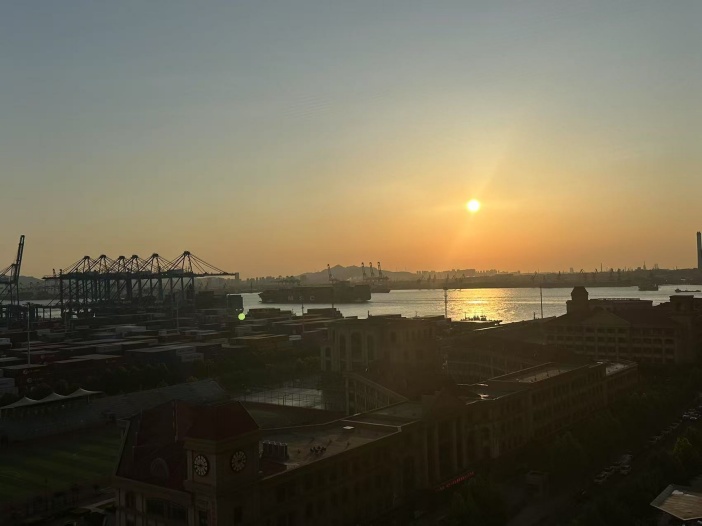
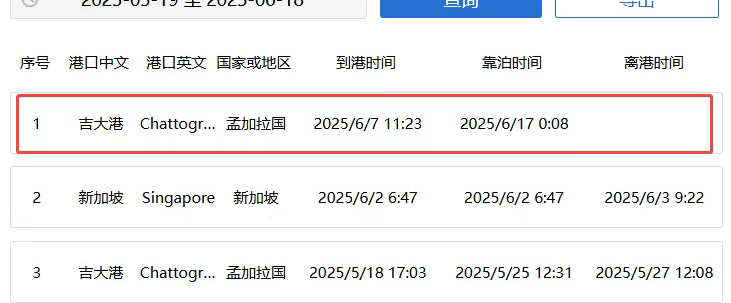
According to sources, although the port terminal was still operational during the holiday period (June 5th to June 14th), the number of importers coming to pick up the goods has decreased, dropping to less than 250 containers per day compared to the normal average of 1000 containers per day. A source from a local freight company said, ‘The significant decrease in container pick-up volume has led to a serious overcapacity of transportation capacity.’. It may take several days for the cargo volume to return to normal. This congestion has led to a large number of ships, including container ships, having to spend too much time fighting for berthing windows and disrupting their original sailing plans. For example, the Sinar Sorong, flying the Singapore flag, departed from Singapore and was originally scheduled to dock on June 6th. However, it did not successfully dock until the 17th, causing a delay of 10 days. In the current situation of soaring charter rates, this has brought huge additional costs to shipping companies.
It is estimated that the normal waiting time in Chittagong is between one to two days. At present, sources say that the situation of ships queuing up for customs clearance at the port is very serious. As of yesterday, about 100 ships are waiting at the dock and outer anchorage. Sources believe that as factories resume operations after the holiday closure, a large backlog of export orders will emerge, putting additional pressure on port terminals. Meanwhile, in this tariff dispute, new trade data seems to indicate that American customers have shifted their clothing procurement targets from China to Bangladesh. According to updated data from the Office of Textiles and Clothing in the United States, Bangladesh’s clothing exports to the United States increased by nearly 30% year-on-year from January to April, reaching $3 billion. In contrast, the related trade volume from China remained relatively stable, while the growth in other Asian markets was more significant: Vietnam grew by 16%; India’s growth rate is 20%; Pakistan has also grown by 20%.
The trade expansion of Bangladesh’s industry is noteworthy, as in recent months, the country’s container supply chain has been under pressure due to a series of border access restrictions imposed by India on transit transportation, which is related to the tense bilateral relationship between the two countries.
Last month, New Delhi implemented new trade restrictions on Bangladesh, allowing only goods from the country to enter the Indian market through the ports of Kolkata and Nivashawar, which posed significant logistics obstacles for Dhaka as Bangladesh exports approximately $700 million worth of ready to wear clothing to India annually.
This boycott seems to be a retaliation against Bangladesh’s announcement of similar restrictions on the export of Indian yarn, which is a “tit for tat” response as New Delhi has revoked a 2020 policy that had previously facilitated the transfer of goods from third-party countries to Bangladesh through Indian airports, especially New Delhi airport.
This boycott seems to be a retaliation against Bangladesh’s announcement of similar restrictions on the export of Indian yarn, which is a “tit for tat” response as New Delhi has revoked a 2020 policy that had previously facilitated the transfer of goods from third-party countries to Bangladesh through Indian airports, especially New Delhi airport.
What Can Shippers Do?
To minimize the impact of ongoing congestion, BRF Logistics recommends:
Advance booking by 2–3 weeks to secure space;
Using alternate ports like Xiamen or Qingdao where possible;
Monitoring vessel ETAs closely and preparing for contingency planning;
Working with experienced freight forwarders who can provide real-time updates and flexible routing.
ข้อคิดสุดท้าย
While port congestion is not a new challenge, the current level of disruption is among the worst in recent years. BRF Logistics continues to monitor the situation closely and is working with reliable carriers to ensure timely delivery of cargo across routes. Stay informed and plan proactively to keep your supply chain resilient.