Container Loading, Securing, and Transportation Strategy Design
Shipping oversized or overweight cargo by sea is one of the most technically demanding areas in international logistics. Unlike standard containerized goods, heavy and out-of-gauge (OOG) cargo requires specialized equipment, engineering calculations, reinforced securing methods, and carefully designed transportation plans.
Improper container selection, inadequate lashing, or poor route planning can result in cargo damage, safety risks, port rejection, or costly delays.
A BRF Logistics, we provide engineered logistics solutions for heavy machinery, industrial equipment, construction components, and oversized project cargo. In this article, we break down the core considerations for container selection, cargo securing, and transportation planning for heavy and oversized shipments.
1. Container Loading Strategy
Choosing the Right Container Type
Container selection is the foundation of safe heavy cargo transport.
Overweight Cargo (Single piece over 28 tons)
For extremely heavy cargo, we recommend:
- Flat Rack (FR) Containers – Designed with reinforced floors and open sides, suitable for heavy lifting and side loading.
- Open Top (OT) Containers – Ideal for top loading with cranes.
These container types allow for safer lifting and better weight distribution.
Oversized (Over-height or Over-width) Cargo
For cargo exceeding standard container dimensions:
- Open Top Containers – Suitable for cargo loaded from above.
- Flat Rack Containers – Ideal for wide cargo that exceeds side walls.
Flat racks allow cargo to extend beyond container width within carrier-approved limits.
Large but Within Standard Limits
For standard large cargo that fits within height and width restrictions:
- 40HQ or 45HQ containers maximize cubic capacity and cost efficiency.
At BRF Logistics, we evaluate whether cargo is weight-driven, volume-driven, or dimension-driven before recommending container types to ensure cost-effective planning.
Loading Methods for Heavy and OOG Cargo
Heavy Cargo Handling
Overweight cargo requires coordinated lifting operations:
- Forklifts combined with gantry cranes
- Top loading (OT) or side loading (FR)
- Avoiding forced insertion that may damage container walls
Professional lifting plans prevent structural stress on both cargo and container.
Extra-Long Cargo
For long equipment or structural materials:
- Position centrally along container length
- Leave buffer space at both ends
- Use bracing blocks to secure both sides
Maintaining balanced weight distribution reduces tipping risks during sea transport.
Mixed Cargo Loading
When multiple items are loaded together:
- Heavy items at the bottom
- Light items on top
- Larger pieces first, smaller pieces as fillers
- Maintain centered gravity
Proper stacking prevents lateral movement and imbalance.
2. Securing and Reinforcement Strategy
Securing is the most critical element in heavy cargo transport. Ocean voyages expose cargo to vessel motion, vibration, and weather impact.
At BRF Logistics, we apply a dual principle: Fixation + Cushioning.
Basic Securing Methods
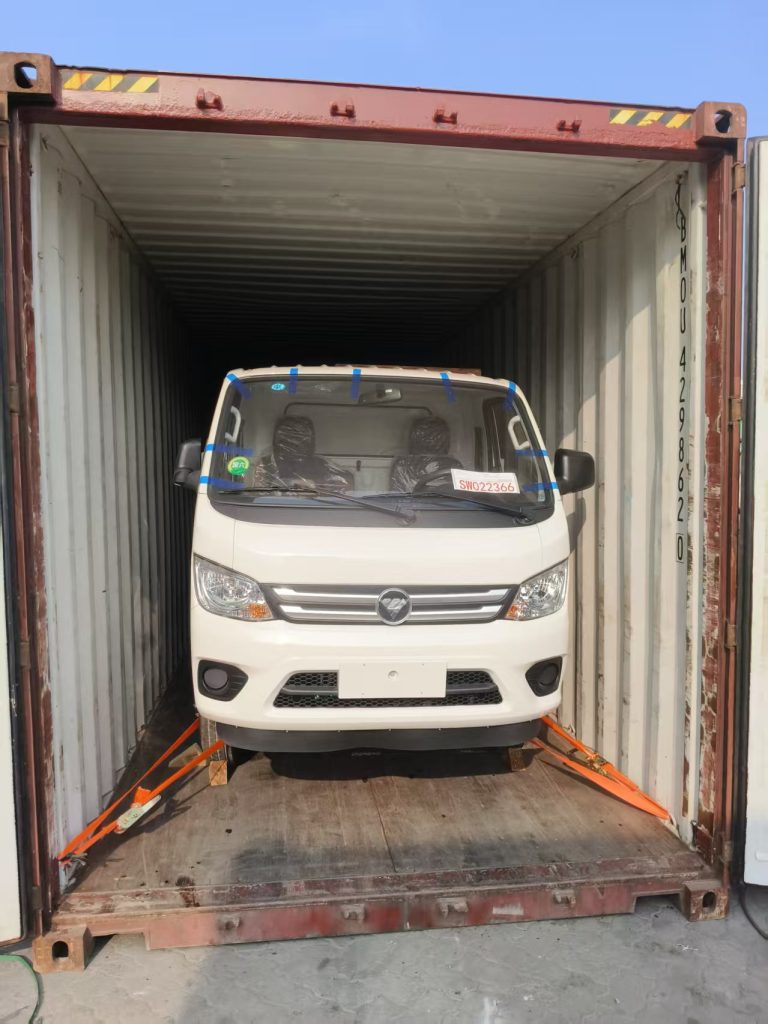
Bottom Fixation
- Lay anti-slip plywood or rubber mats
- Use expansion bolts and steel angle brackets to anchor cargo base to container floor
- Reinforce with wooden blocks when necessary
This prevents longitudinal movement during vessel acceleration or braking.
Side Reinforcement
- Install wooden beams or steel braces between cargo and container walls
- Fill gaps with foam cushions or wooden wedges
Side bracing prevents lateral shifting during rough seas.
Top Securing
For Open Top containers:
- Use steel wire ropes with tensioners
- Apply diagonal lashing for cross stability
For Flat Rack containers:
- Install horizontal steel bars to prevent displacement
Proper lashing angles and tension distribution are essential for maritime compliance.
Special Reinforcement Measures
Fragile Oversized Cargo
- Wrap with protective foam padding
- Use stretch film for stability
- Install edge protectors or wooden frames
High Center-of-Gravity Cargo
- Widen base support
- Add diagonal side braces
- Lower effective center of gravity
Slippery Surface Cargo
- Apply anti-slip rubber mats
- Cross-bind with steel straps or heavy-duty belts
Engineering-based securing minimizes vibration damage and insurance claims.
3. Transportation Planning Strategy
Heavy cargo logistics extends beyond loading — route and carrier planning are equally critical.
Pre-Transport Preparation
Before shipment:
- Accurately calculate dimensions and weight
- Verify port and route weight limitations
- Confirm vessel deck load capacity
- Purchase comprehensive cargo insurance covering lifting, inland transport, and maritime risks
- Secure special equipment space with carrier in advance
Direct sailings are strongly recommended to minimize transshipment lifting risks.
At BRF Logistics, we prioritize direct routes whenever possible to reduce intermediate handling damage.
In-Transit Risk Control
During transit:
- Work with experienced project cargo specialists
- Select transshipment ports with advanced heavy-lifting capability
- Avoid ports known for rough handling practices
For high-value or precision equipment, we can install:
- GPS tracking devices
- Shock and vibration monitoring sensors
Real-time monitoring enhances cargo visibility and risk management.
Destination Port Operations
Heavy cargo discharge requires careful coordination.
Before arrival:
- Pre-book lifting equipment (mobile cranes or heavy forklifts)
- Arrange on-site supervision
During unloading:
- Release lashing before lifting
- Follow proper lifting sequence
- Avoid uneven weight release
Prompt customs clearance and pickup reduce terminal storage and demurrage charges.
Core Principles for Heavy Cargo Ocean Freight
- Overweight cargo → prioritize Flat Rack
- Over-height/width cargo → prioritize Open Top
- Maintain centered gravity
- Combine steel and wood reinforcement
- Prioritize direct sailings
- Partner with experienced project cargo forwarders
Oversized cargo transport is not simply shipping — it is engineering logistics.
The BRF Logistics Advantage
Handling heavy and oversized cargo requires:
- Structural assessment capability
- Specialized equipment coordination
- Carrier negotiation expertise
- Port operation familiarity
- End-to-end risk management
Noi di BRF Logistics offriamo:
- Customized loading plans
- Engineering-based lashing design
- Direct carrier coordination
- On-site supervision when required
- Insurance consultation and risk mitigation
Our goal is not just to move cargo — but to ensure it arrives safely, compliantly, and efficiently.
In project logistics, precision defines professionalism. With BRF Logistics, oversized cargo is managed through structured planning, technical expertise, and disciplined execution.