How to Prepare a Flexitank Container: Complete Installation & Loading Guide
Flexitanks have become an efficient solution for transporting large volumes of non-hazardous liquid cargo in standard shipping containers. Products such as edible oils, fruit juice concentrates, syrups, wine, lubricants, base oils, and other compatible liquids can often be shipped using a flexitank installed inside a 20ft dry container.
However, the reliability of a flexitank shipment depends heavily on one critical step:
proper flexitank container preparation.
Even a high-quality flexitank can be damaged if it is installed inside a dirty, damaged, rusty, or poorly prepared container. Sharp edges, protruding screws, damaged flooring, rough welds, and incorrect bulkhead installation can all increase the risk of puncture, abrasion, leakage, or cargo loss.
In this guide, BRF Lojistik explains how to prepare a flexitank container, how to install the flexitank and bulkhead correctly, and what should be checked before liquid cargo loading begins.
What Is Flexitank Container Preparation?
Flexitank container preparation is the process of inspecting, cleaning, protecting, and modifying the interior of a standard dry shipping container before a flexitank is installed.
A flexitank may contain more than 20,000 liters of liquid. Once filled, the liquid creates substantial pressure against the flexitank walls and the container structure.
During truck transportation and ocean freight, the liquid also moves continuously due to:
- Acceleration
- Braking
- Turning
- Vessel movement
- Container lifting
- Liman işlemleri
- Road vibration
For this reason, even a relatively small sharp edge or damaged weld inside the container can eventually cause serious abrasion.
Proper preparation creates a smoother and safer environment for the flexitank throughout the journey.
Choosing the Right Container for a Flexitank
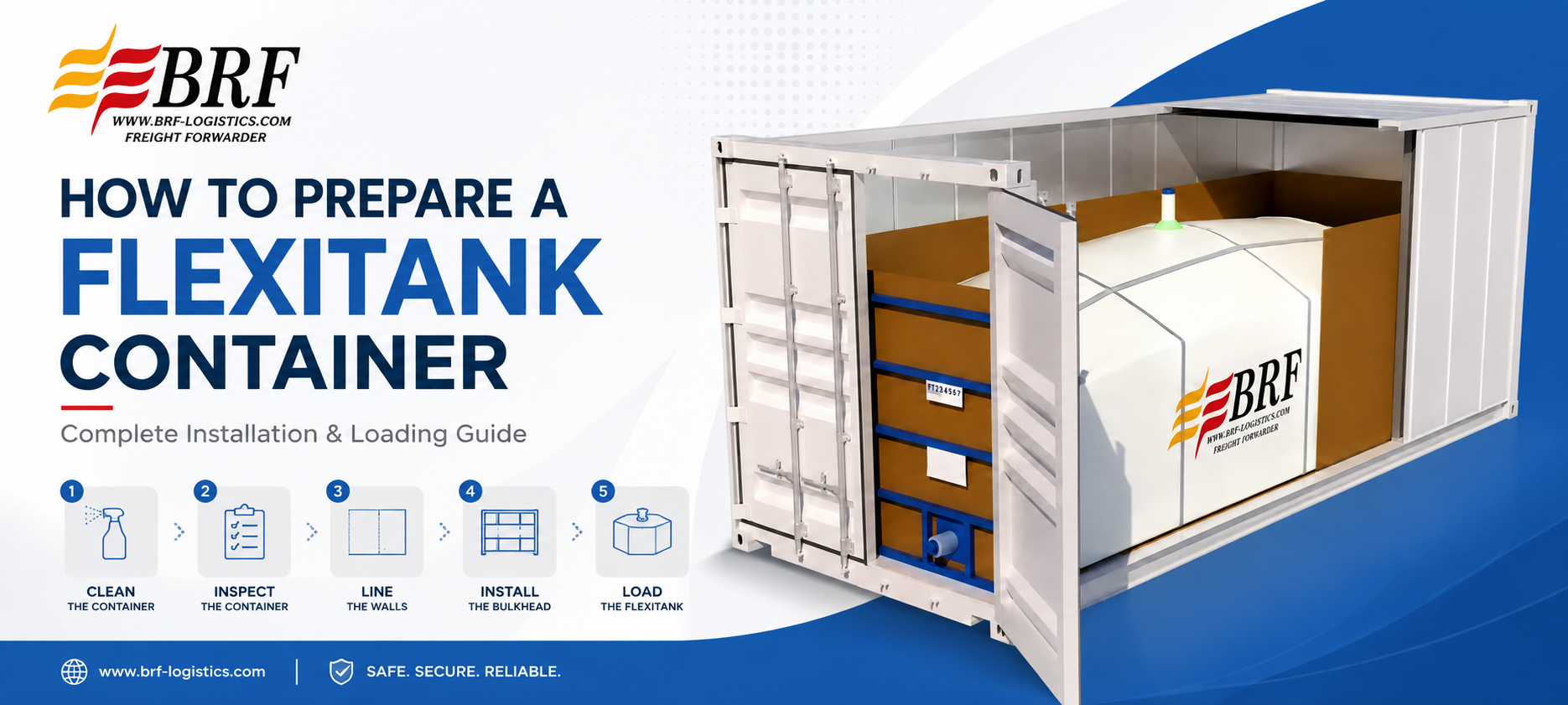
Before installation begins, the shipping container itself must be suitable.
Flexitanks are most commonly installed in a:
20ft general-purpose dry freight container.
BRF Logistics recommends checking the container carefully before acceptance.
Depending on the flexitank system, cargo weight, shipping line, and supplier requirements, the container should have an appropriate maximum gross weight rating. Many flexitank operations prefer containers with a gross rating of approximately 30 metric tons or more.
Some flexitank systems or operating procedures may also recommend relatively newer containers because they are more likely to have floors and sidewalls in good structural condition.
However, container acceptance should always be based on the actual condition of the equipment and the requirements of the flexitank manufacturer, carrier, and loading procedure.
A container should be rejected if serious problems are found, including:
- Damaged flooring
- Holes in the walls
- Severe corrosion
- Sharp protrusions
- Broken internal panels
- Contamination
- Strong chemical odors
- Water leakage
- Structural deformation
- Hasarlı kapılar
Never install a flexitank simply because a container is available.
Container condition is one of the most important risk-control factors in flexitank transportation.
Step 1: Clean the Shipping Container
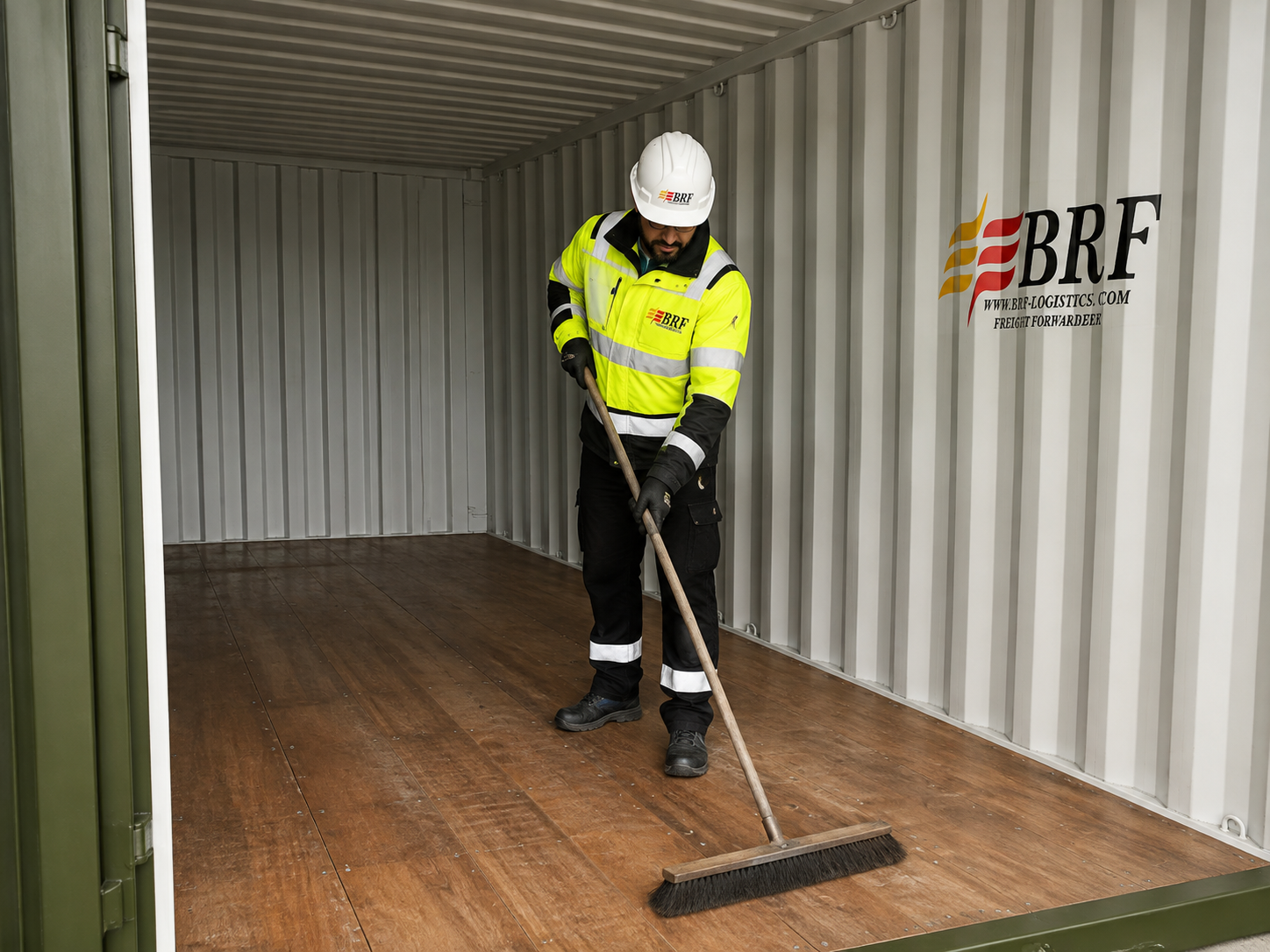
The first step in preparing a flexitank container is a complete interior cleaning.
Open the container and remove all:
- Dust
- Dirt
- Wood splinters
- Loose nails
- Screws
- Metal pieces
- Packaging residues
- Stones
- Previous cargo residues
The floor should be swept thoroughly.
While cleaning, inspect the flooring carefully because small screws, nails, broken timber, and metal fragments can puncture the flexitank after loading.
The flexitank may weigh more than 20 tons when full, meaning even a small sharp object underneath the bag can become dangerous under pressure.
If contamination or chemical residues from previous cargoes are present, the container should not be used until it has been properly cleaned and confirmed suitable.
For food-grade liquids, cleanliness is particularly important.
Cargo such as:
- Sunflower oil
- Olive oil
- Soybean oil
- Juice concentrate
- Şarap
- Glucose syrup
may require higher hygiene standards.
A clean container reduces both physical damage risks and contamination concerns.
Step 2: Inspect the Floor, Walls and Internal Surfaces
After cleaning, inspect every surface that could come into contact with the flexitank.
Pay special attention to:
Container Floor
Check for:
- Broken plywood
- Splinters
- Raised screws
- Nails
- Holes
- Cracks
- Metal projections
Sidewalls
Run your hand carefully along accessible surfaces to identify rough areas or sharp projections.
Pay attention to welded areas because welding points can sometimes create uneven surfaces.
Front Wall
The nose end of the container experiences significant pressure once the flexitank is full.
Check that the front wall is structurally sound and free from damaging protrusions.
Container Corners
Corners and welded joints require particular attention because flexitank movement can create repeated friction at these points during transportation.
Any unsafe container should be rejected rather than repaired temporarily if there is doubt about its suitability.
Step 3: Cover Rough Edges and Protect the Container Walls
Once inspection is complete, suitable protective materials should be installed.
Corrugated cardboard or other approved lining material may be used to cover the internal container walls.
This protective layer helps reduce direct contact between the flexitank and:
- Metal surfaces
- Rough welds
- Container ribs
- Sharp joints
- Uneven surfaces
The protective material should be secured so it does not move during installation or filling.
Approved tape may also be applied over rough welds and other potential abrasion points.
Special attention should be given to vertical corner welds.
Protection may extend upward from the container floor along areas where the flexitank is expected to make contact when fully loaded.
The objective is simple:
create a smooth internal environment between the container and the flexitank.
Step 4: Inspect the Flexitank Before Installation
Before removing the flexitank from its packaging, inspect the box or protective package.
Look for:
- Crushing
- Tears
- Penetration
- Su hasarı
- Punctures
- Serious deformation
If the packaging appears to have been penetrated by a sharp object, the flexitank itself should be inspected carefully before use.
A damaged flexitank should never be installed simply to avoid replacing the unit.
Once a flexitank carrying 20,000 liters of liquid begins leaking, the cost of recovery can be significantly higher than the cost of replacing a questionable bag before loading.
Step 5: Install and Unfold the Flexitank
Carefully remove the flexitank from its packaging and position it according to the manufacturer’s installation instructions.
The bag is normally unfolded along the length of the container toward the front or nose end.
During this process:
- Do not drag the flexitank across sharp surfaces.
- Keep the bag centered.
- Unroll it slowly.
- Make sure it is not twisted.
- Keep side flaps reasonably symmetrical.
- Confirm that the valve orientation is correct.
The flexitank should lie evenly across the container floor before loading begins.
An incorrectly positioned flexitank can create uneven pressure as it fills, increasing stress on the bag, valve, bulkhead, or container structure.
Step 6: Install the Flexitank Bulkhead
The bulkhead is one of the most important components of a flexitank installation.
Once the bag is filled, enormous pressure is exerted toward the container doors.
The bulkhead acts as a retaining system that helps prevent the full flexitank from pushing directly against the doors.
Depending on the flexitank design, the system may include:
- A bulkhead sheet
- Horizontal retaining bars
- Adjustable bars
- Door buffers
- Valve retention components
- Kayışlar
- Cable ties
Install the bulkhead according to the flexitank manufacturer’s approved configuration.
The lower section of the bulkhead sheet may need to be positioned underneath the flexitank.
Retaining bars are then placed across designated container shoring slots or supporting positions.
Each bar should be checked carefully to confirm that it is properly secured.
Step 7: Position and Secure the Flexitank Valve
The loading and discharge valve must pass through the designated opening in the bulkhead.
The valve should be:
- Correctly positioned
- Fully accessible
- Properly supported
- Securely retained
- Protected from unnecessary pressure
Valve retention is particularly important because hose weight and loading operations can create substantial stress on the valve connection.
Secure the valve retention system according to the equipment instructions.
Before filling starts, inspect the valve and surrounding material again for any visible damage.
Step 8: Prepare for Flexitank Loading
Once the container, flexitank, bulkhead, and valve have been correctly prepared, loading can begin.
Before connecting the loading hose, verify:
- Konteynerin durumu
- Bulkhead installation
- Flexitank position
- Valve security
- Yük uyumluluğu
- Required loading volume
- Yük yoğunluğu
- Product temperature
- Maximum payload
- Shipping line approval
The appropriate container door should remain closed and secured according to the loading procedure while access is maintained to the flexitank valve.
Connect the loading hose using the correct fitting, such as a compatible cam-lock connection.
Before connecting the hose, it is good practice to remove unnecessary air from the loading line.
Introducing excessive air into a flexitank should be avoided because the system is designed primarily to transport liquid rather than large quantities of trapped air.
Step 9: Start Loading Slowly
At the beginning of the filling process, liquid should normally be pumped into the flexitank slowly.
This allows the bag to:
- Expand naturally
- Settle into position
- Spread evenly
- Avoid sudden pressure changes
During the early loading stage, operators should monitor:
- Flexitank position
- Valve condition
- Bulkhead movement
- Hose connection
- Leaks
- Abnormal deformation
Loading speed can then be adjusted according to the product, pump capacity, flexitank manufacturer’s instructions, and loading procedure.
Flexitank Loading Volume and Temperature
The exact filling percentage depends on the flexitank design.
Some flexitank systems specify minimum filling requirements around 95% of nominal capacity because underfilling can allow excessive liquid movement during transportation.
However, this should not be treated as a universal rule.
Always follow the manufacturer’s approved filling range.
The maximum loading temperature also depends on:
- Flexitank material
- Kargo
- Valve specification
- Manufacturer instructions
Certain systems may permit product temperatures around 60–65°C, while others may have lower limits.
Never assume a temperature limit without confirming the specific flexitank specification.
Step 10: Complete Loading and Seal the Container
After the required cargo quantity has been loaded:
- Stop the pump.
- Close the flexitank valve.
- Drain the remaining liquid from the loading hose.
- Disconnect the hose carefully.
- Confirm that the valve is completely closed.
- Install the valve cap or protective cover.
- Inspect the bulkhead again.
- Confirm that no leakage is present.
- Close both container doors.
- Apply the shipping container security seal.
Record the seal number together with the shipping documentation.
The flexitank container is now ready for inland transportation and delivery to the export port.
BRF Logistics Flexitank Shipping Services
Preparing the flexitank correctly is only one part of successful international liquid cargo transportation.
BRF Logistics can coordinate the complete logistics process, including:
- Supplier pickup in China
- Empty container release
- Flexitank kurulumu
- Container inspection
- Liquid cargo loading coordination
- İhracat gümrük işlemleri
- Denizyolu nakliye rezervasyonu
- Liman taşımacılığı
- İthalat gümrük koordinasyonu
- Hedefe teslimat
- Flexitank unloading arrangements
For exporters shipping non-hazardous liquid products from China, combining professional flexitank preparation with an experienced freight forwarding team can reduce operational risks and simplify the entire supply chain.
Flexitank Container Preparation Checklist
Before loading, check the following:
- Suitable 20ft dry container selected
- Container structurally sound
- Floor clean and dry
- No nails or protruding screws
- No sharp metal edges
- No serious rust or holes
- No dangerous cargo residues
- Internal walls protected where required
- Rough welds properly covered
- Flexitank packaging undamaged
- Flexitank correctly positioned
- Bulkhead properly installed
- Valve correctly secured
- Cargo compatible with flexitank material
- Cargo density confirmed
- Loading quantity calculated
- Payload limitations checked
- Loading temperature approved
- Carrier requirements confirmed
If the container fails any critical inspection point, it should be rejected and replaced.
FAQ About Preparing a Flexitank Container
What size container is normally used for a flexitank?
A 20ft general-purpose dry container is the most commonly used container for international flexitank shipping.
Why are 40ft containers normally not used for flexitanks?
The long internal space of a 40ft container can create greater liquid movement and dynamic forces. Flexitank systems are therefore generally designed around the dimensions and structural characteristics of a 20ft container.
Why must sharp edges be covered?
A fully loaded flexitank creates substantial pressure against the floor and walls. Even a small sharp edge can gradually damage the polyethylene layers through repeated rubbing during transportation.
Can an old shipping container be used?
Container age alone should not determine suitability. Structural condition is critical. The floor, walls, doors, welds, and internal surfaces must meet applicable flexitank, container, and carrier requirements.
How much liquid can a flexitank carry?
Common flexitank capacities range from approximately 16,000 to 26,000 liters, although 20,000–24,000-liter systems are widely used.
Actual loading volume depends on cargo density, flexitank capacity, container payload, and transport regulations.
Can any liquid be loaded into a flexitank?
Hayır.
Standard flexitanks are primarily used for compatible non-hazardous liquids.
The SDS, chemical composition, viscosity, density, temperature, and flexitank material compatibility should be checked before loading.
What happens if the flexitank is underfilled?
Excessive empty space may allow greater liquid movement or surging during transportation. This can increase dynamic forces on the flexitank and container.
Always follow the approved filling range specified by the flexitank manufacturer.
Sonuç
Learning how to prepare a flexitank container correctly is essential for safe bulk liquid transportation.
A successful flexitank shipment starts with selecting the right 20ft container, followed by careful cleaning, inspection, wall protection, flexitank positioning, bulkhead installation, valve securing, controlled loading, and final sealing.
Skipping any of these steps can increase the risk of puncture, leakage, contamination, cargo loss, or container damage.
For companies shipping edible oils, juice concentrates, syrups, base oils, lubricants, and other compatible non-hazardous liquids, professional flexitank preparation combined with reliable international freight forwarding can provide an efficient and cost-effective bulk liquid logistics solution.
BRF Logistics provides flexitank container preparation, loading coordination, ocean freight, customs clearance, and door-to-door shipping solutions for international bulk liquid cargo.