The situation in the Strait of Hormuz and the Red Sea region has escalated rapidly in recent days, creating significant uncertainty across global shipping markets. As geopolitical tensions intensify, major carriers are adjusting operations, insurance costs are soaring, and global supply chains are once again facing severe disruption.
For importers and exporters, this is not just headline news — it directly impacts transit times, freight rates, fuel surcharges, and cargo safety. In times like these, partnering with an experienced logistics provider such as BRF Logistics becomes more critical than ever.
Major Carrier Operational Updates
Several of the world’s leading shipping lines have announced immediate operational changes:
COSCO Shipping Lines
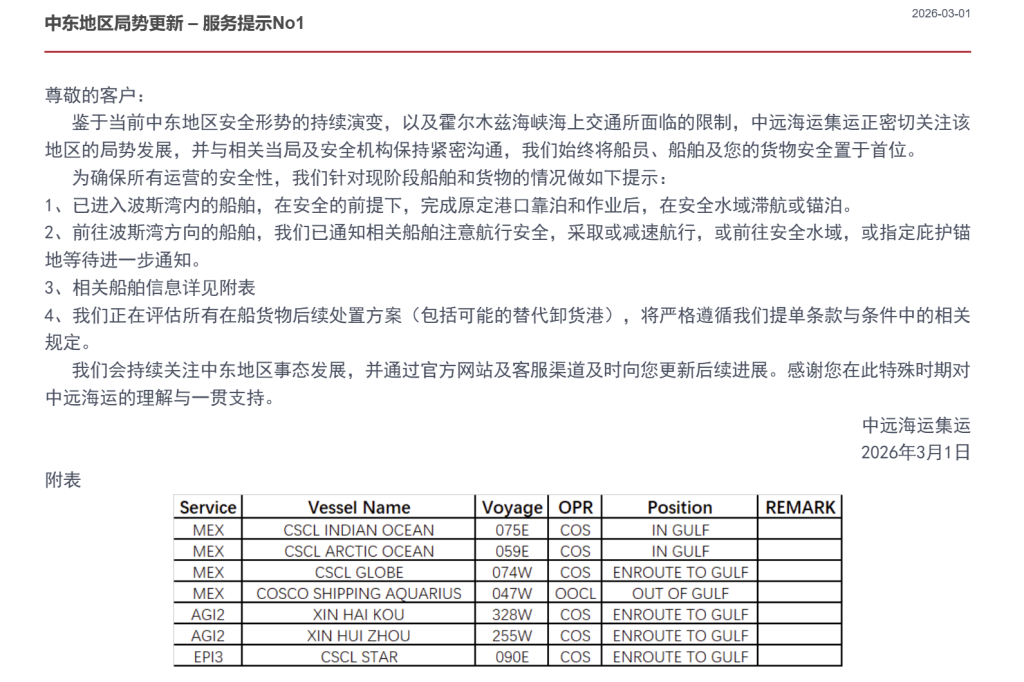
Vessels that have already entered or are en route to the Persian Gulf will complete their originally scheduled port calls. After cargo operations, ships will proceed to safe waters to drift or anchor while awaiting further instructions.
Hapag-Lloyd
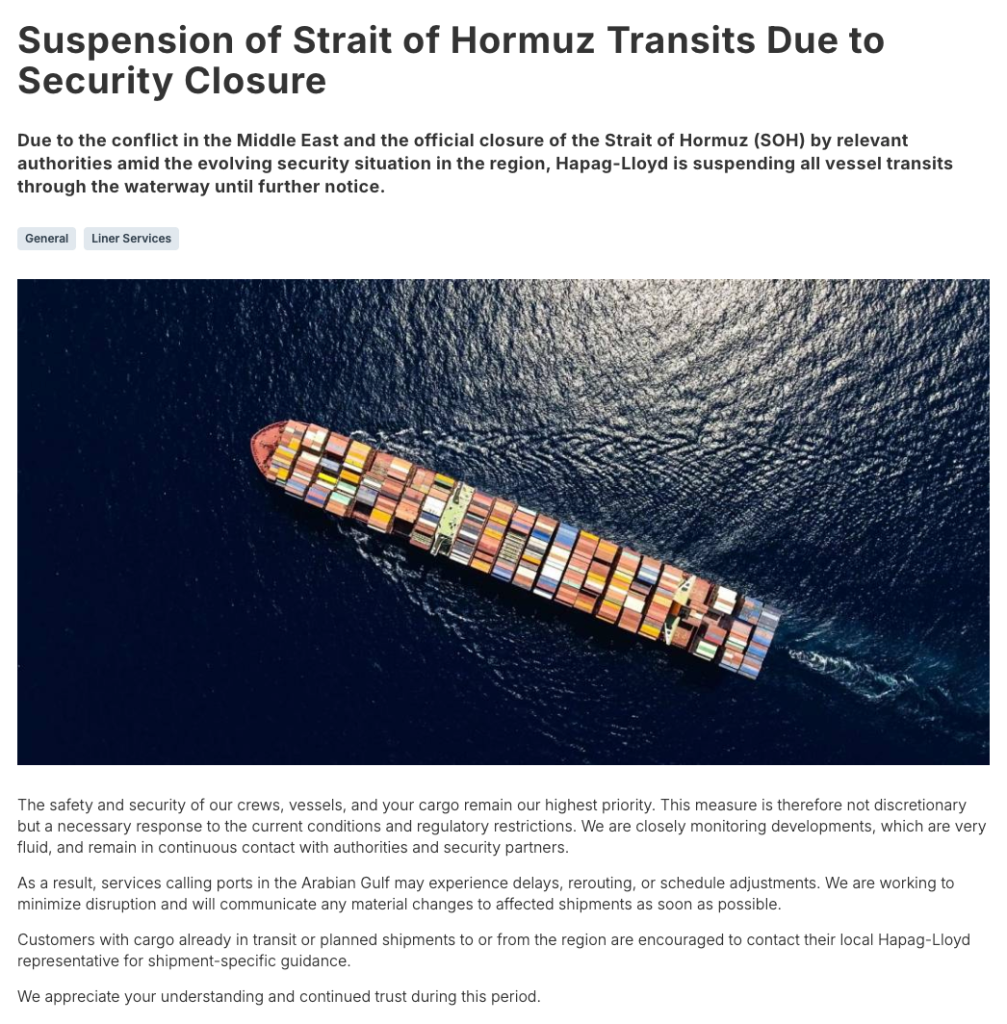
The company has suspended all vessel transits through the Strait of Hormuz until further notice.
CMA CGM
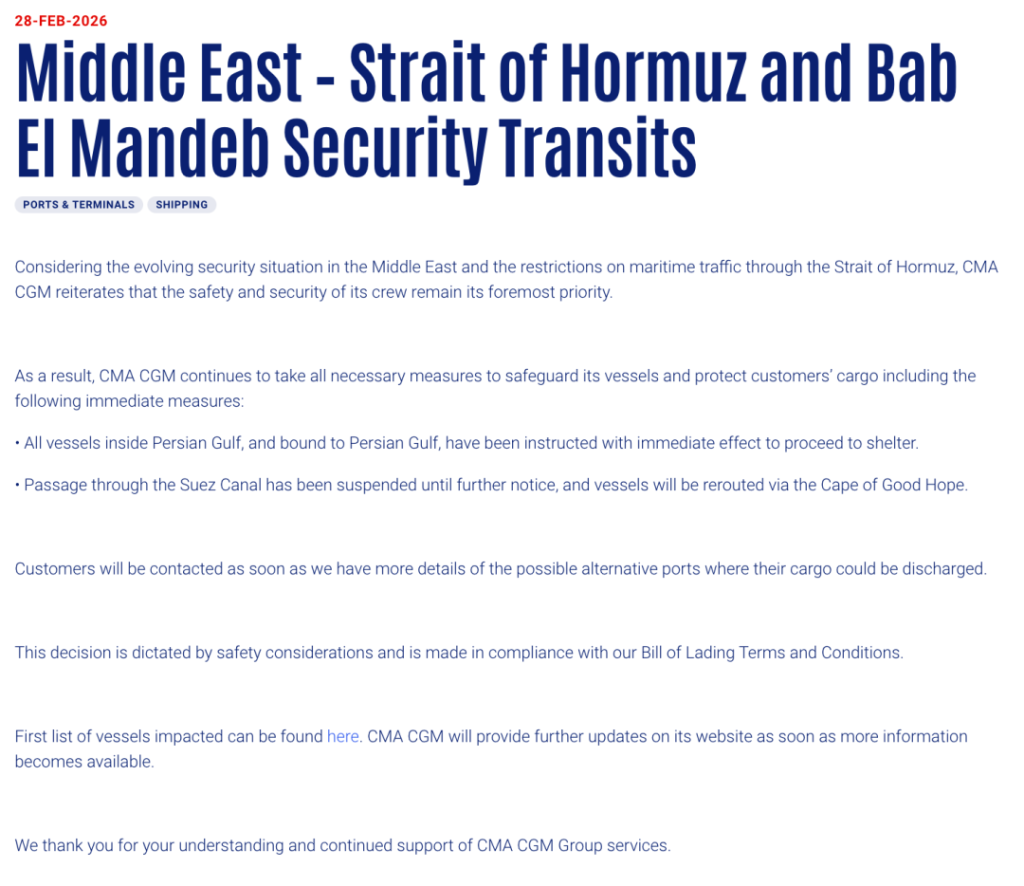
All vessels currently in the Persian Gulf or heading toward it have been instructed to move immediately to safe areas. The company has confirmed rerouting via the Cap de Bonne-Espérance, bypassing the Suez Canal.
Maersk
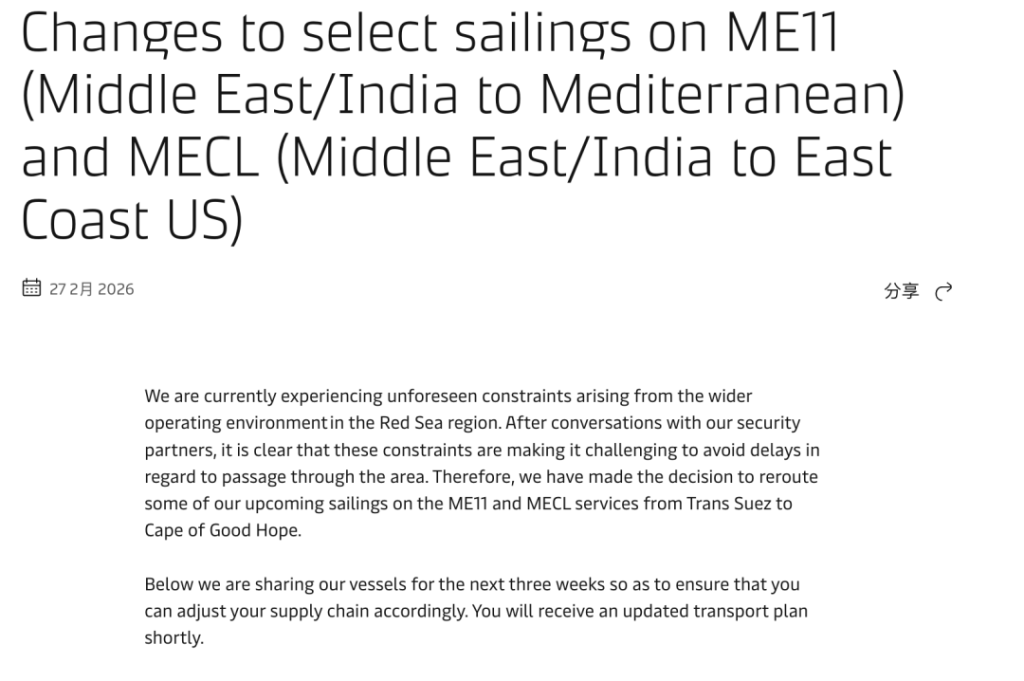
Partial sailings on the ME11 and MECL services have been diverted from the Suez Canal to the Cape of Good Hope route.
At present, a large number of vessels operating in the Persian Gulf are seeking temporary refuge within neutral territorial waters. This extraordinary movement reflects the seriousness of the risk environment.
Oil Prices Surge as Market Prices in Risk
On March 2, international crude oil markets reacted sharply to the escalating tensions.
- Brent Crude surged nearly 13% intraday, reaching approximately USD 82 per barrel.
- According to a recent report from Goldman Sachs, the oil market has already priced in an immediate risk premium of approximately USD 18 per barrel.
- This premium reflects market expectations equivalent to a potential six-week closure of the Strait of Hormuz.
As fuel costs represent a significant component of ocean freight pricing, further volatility may directly influence bunker surcharges and overall freight rates.
War Risk Insurance Premiums Skyrocket
The shipping insurance market is experiencing unprecedented stress:
- War risk premiums for commercial vessels have surged by 50%.
- For a Very Large Crude Carrier (VLCC) valued at USD 100 million, single transit insurance costs have jumped from approximately USD 250,000 to between USD 375,000 and USD 500,000.
- Major insurers, including Lloyd’s of London, have issued advance notices reserving the right to withdraw coverage within seven days for ships operating in the affected region.
- Some insurance companies have already refused to accept new orders involving the Persian Gulf.
This means vessels entering the area next week could potentially face the risk of sailing without insurance coverage if tensions worsen.
What This Means for Global Supply Chains
The Strait of Hormuz handles roughly one-fifth of global oil supply, and disruptions here have a ripple effect across:
- Asia–Europe trade lanes
- Middle East exports
- Energy markets
- Container freight availability
- Global manufacturing supply chains
With vessels diverting around the Cape of Good Hope, transit times between Asia and Europe may increase by 10–15 days, leading to:
- Pénurie de matériel
- Port congestion in alternative hubs
- Rate volatility
- Increased demurrage and detention risks
Supply chain stability is facing one of its most severe tests in recent years.
How BRF Logistics Supports Your Cargo During Uncertainty
In a volatile environment like this, proactive logistics management is essential. At BRF Logistics, we provide:
1. Real-Time Route Monitoring
We closely track vessel movements, carrier announcements, and geopolitical updates to advise clients immediately on route changes and potential delays.
2. Flexible Routing Solutions
If Suez or Hormuz routes are suspended, we evaluate:
- Cape of Good Hope alternatives
- Multimodal combinations
- Transshipment options
- Air freight contingencies for urgent cargo
3. Transparent Cost Forecasting
With oil prices and war risk premiums fluctuating, we provide advance freight cost analysis so clients can plan budgets and adjust pricing strategies accordingly.
4. Insurance Risk Advisory
Given the volatility in marine insurance markets, we help clients:
- Assess cargo insurance adequacy
- Understand war risk exclusions
- Secure alternative coverage where available
5. Global Network Coordination
Our partnerships with major carriers allow us to secure space even during capacity tightening and route disruptions.
Strategic Recommendations for Shippers
If your cargo involves the Middle East, Europe, or Asia trade lanes, we recommend:
- Confirm booking status immediately
- Review Incoterms and risk transfer points
- Secure cargo insurance in advance
- Prepare for longer lead times
- Maintain buffer inventory where possible
- Stay in close contact with your freight forwarder
Delaying decisions in uncertain conditions can increase both costs and risks.
The coming weeks will be critical. Should tensions escalate further, prolonged rerouting and higher freight costs may become the new normal in Q2 2026. Conversely, any diplomatic breakthrough could stabilize the market quickly — but volatility will remain elevated.
In times of disruption, the difference between profit and loss often lies in logistics execution.
BRF Logistics stands ready to navigate complexity, manage risk, and safeguard your cargo across global routes.
If your shipments may be affected by developments in the Strait of Hormuz or the Red Sea, contact BRF Logistics today for tailored routing strategies and professional support.
Your cargo deserves certainty — even in uncertain times.