After three months of stability, global container schedule reliability dropped sharply in October, highlighting the ongoing volatility among major shipping lines. The latest Global Liner Performance (GLP) Report #171 released by Sea-Intelligence shows an unexpected decline that has drawn widespread industry attention.
Global On-Time Performance: Key Highlights
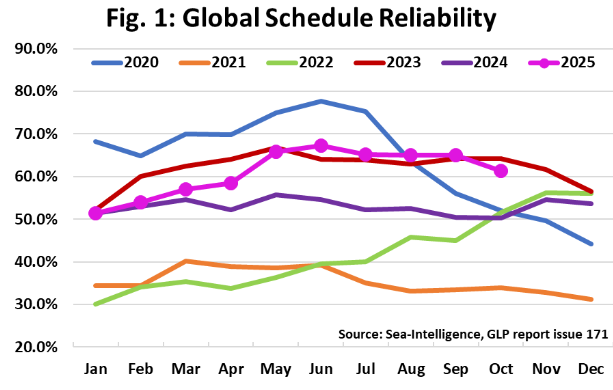
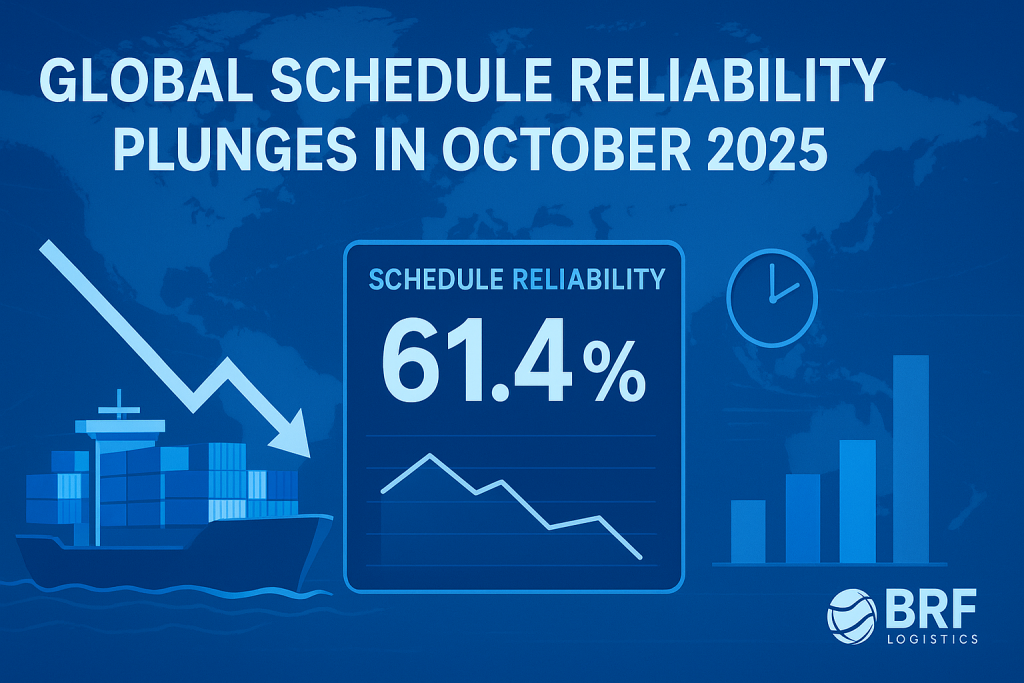
Global schedule reliability fell 3.5 percentage points month-over-month to 61.4% in October.
This marks the second significant monthly decline of the year, following a period of relative stability.
Le average delay for late vessels edged up to 4.98 days.
Despite the downturn, reliability remains 11.1 percentage points higher than the same period last year, and the average delay is 0.87 days shorter than in 2024—indicating long-term improvements across the industry.
Performance of Major Global Carriers
Across the 13 top carriers assessed, performance varied significantly:
Maersk leads with an impressive 74.1% schedule reliability.
Hapag-Lloyd ranks second at 69.6%.
MSC follows with 65.9%.
The remaining nine carriers fall within the 50–60% range.
PIL ranks last, with the lowest reliability at 44.9%.
Alliance Performance: Gemini Leads the Market
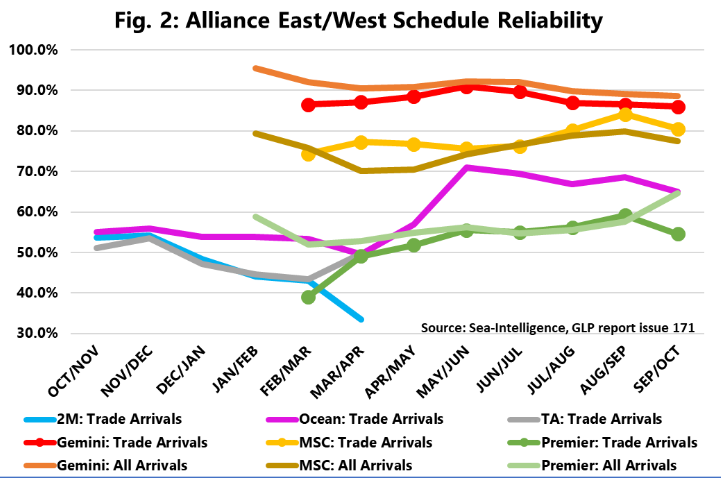
Sea-Intelligence also evaluated carrier alliances under two indicators: “all arrivals” et “trade arrivals”.
2025 September–October Results
Gemini Cooperation Network performed outstandingly:
All arrivals: 88.6%
Trade arrivals: 86.0%
MSC followed:
All arrivals: 77.5%
Trade arrivals: 80.5%
Premier Alliance lagged behind:
All arrivals: 64.6%
Trade arrivals: 54.6%
Ocean Alliance reported:
Both indicators: 65.0%
As alliances move toward full deployment, their metrics are expected to converge. For now, the Gemini network maintains a significant advantage.
Why Is Schedule Reliability Declining? Key Causes
Schedule disruptions remain common in global maritime trade. The main contributors include:
1. Natural Environment
Uncontrollable factors such as typhoons, dense fog, snowstorms, abnormal water levels, or natural disasters (earthquakes, tsunamis) can cause widespread and prolonged delays.
2. Geopolitical Conflicts
Instability in critical chokepoints like the Red Sea or the Strait of Malacca forces vessels to reroute, extending transit times significantly.
3. Port Operations
Berth congestion, equipment breakdowns, limited handling capacity, inefficient labor productivity, or port strikes can prolong port stays.
4. Policy and External Regulations
Sudden trade restrictions, upgraded port health controls, or navigational restrictions may directly prevent vessels from berthing or passing through key waterways.
5. Vessel-Related Issues
Mechanical failures, supply shortages, crew health problems, or crew visa issues can delay departures—especially on long-haul international routes.
Impact on Importers, Exporters, and Freight Forwarders
Schedule delays create ripple effects across the supply chain:
For importers/exporters
Disrupted inventory planning
Difficulty meeting delivery commitments
Increased risk of contract breaches
Possible loss of seasonal sales opportunities
For freight forwarders
More customer complaints
Constant adjustments to booking and routing plans
Greater operational uncertainty
Additional Cost Burdens
Higher storage and demurrage fees
Port congestion surcharges
Additional inland transport or warehousing expenses
Conclusion: Reliability Matters More Than Ever
Although long-term schedule reliability has improved compared with last year, the month-to-month volatility underscores persistent uncertainties in global supply chains. For businesses reliant on ocean freight, selecting carriers and alliances with higher on-time performance is crucial to minimizing risk and ensuring stable operations.
FAQ
1. What is schedule reliability in container shipping?
Schedule reliability refers to the percentage of vessel arrivals that occur on time according to published schedules. It reflects the service stability of a shipping line.
2. Why did global schedule reliability decline in October 2025?
The decline was driven by a combination of natural weather disruptions, geopolitical conflicts, port congestion, operational inefficiencies, and vessel-related issues.
3. Which carriers performed the best in October?
Maersk topped the list with 74.1% reliability, followed by Hapag-Lloyd at 69.6% and MSC at 65.9%. PIL ranked last with only 44.9%.
4. Which shipping alliance performed best?
The Gemini Cooperation Network led the market with 88.6% (all arrivals) and 86.0% (trade arrivals), outperforming MSC, Premier Alliance, and Ocean Alliance.
5. How do schedule delays affect importers and exporters?
Delays disrupt inventory planning, delivery commitments, and production cycles. Businesses may face higher storage fees, missed sales seasons, and increased operational risks.
6. How can shippers reduce schedule delay risks?
Choosing high-reliability carriers, diversifying routes, working with experienced freight forwarders, and building buffer time into supply chains can significantly reduce risk.