When shipping goods internationally, one of the most important decisions shippers face is whether to use a COC (Carrier Owned Container) or an SOC (Shipper Owned Container). Both options play a critical role in the logistics industry, but they differ in ownership, cost structure, and flexibility. Understanding these differences can help businesses choose the most suitable option for their supply chain needs.
What Is a COC (Carrier Owned Container)?
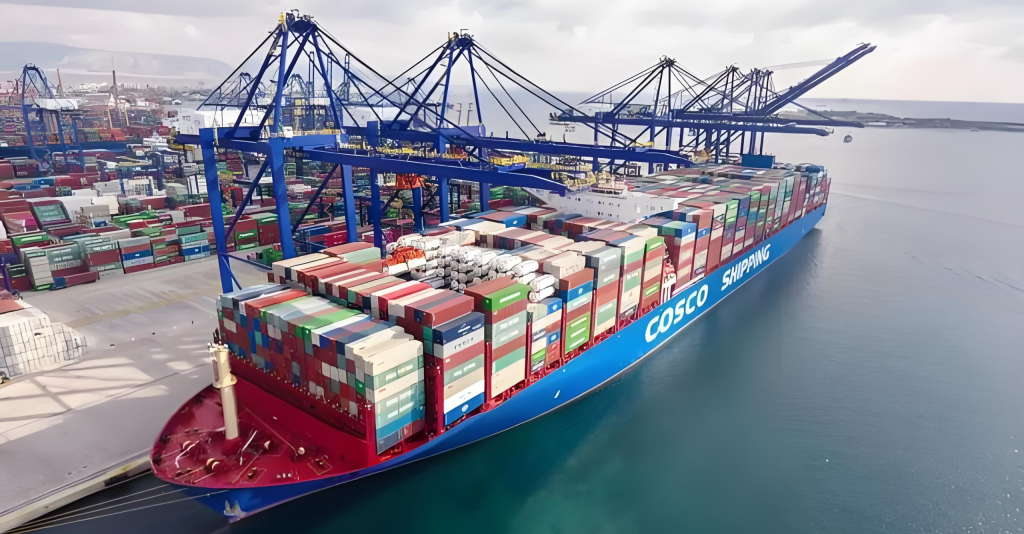
A Carrier Owned Container (COC) is a shipping container that belongs to the ocean carrier or shipping line. When a shipper books cargo space with a carrier, the carrier provides one of its own containers for the transportation of goods. These containers are part of the carrier’s fleet, standardized, and maintained according to international shipping regulations.
Key Characteristics of COC:
Ownership & Responsibility
The carrier owns the container, which means it is responsible for its availability, maintenance, and repositioning after each shipment. Shippers simply lease the container from the carrier for the duration of the transport.Convenience for Shippers
With COC, shippers do not need to worry about sourcing or managing containers. The shipping line ensures that the container is ready, clean, and in seaworthy condition, making this option very convenient—especially for first-time or small-volume exporters.Standardization & Quality Assurance
Since carriers operate large fleets, their containers typically comply with ISO standards, ensuring uniform size, durability, and compatibility with global port handling equipment. This reduces the risk of operational issues during loading, unloading, or transshipment.Demurrage and Detention Risk
While COC provides convenience, it also comes with stricter time limits for returning the container. If a shipper delays unloading or returning the container, carriers charge demurrage (for holding the container at the port) or detention (for keeping it outside the port). These charges can escalate quickly if not managed properly.Best Use Cases
Regular trade routes where carriers have strong equipment availability.
Shippers who prioritize simplicity and do not want to manage container logistics.
Short-term shipments where demurrage/detention risks are low.
What Is an SOC (Shipper Owned Container)?
Key Characteristics of SOC:
Ownership & Control
Unlike COCs, where the carrier manages the equipment, SOCs give shippers direct control. The shipper decides which container to use, how long to keep it, and where it should be repositioned. This ownership provides more flexibility in planning logistics.Avoiding Demurrage and Detention Fees
One of the major advantages of SOCs is the reduced risk of incurring demurrage (fees for holding containers at the port) or detention charges (fees for delayed return). Since the container belongs to the shipper, there is no strict return deadline set by the carrier. This makes SOCs especially cost-effective for shipments to regions where port congestion or customs delays are common.Flexibility on Special Routes
SOCs are widely used on imbalanced trade lanes where carriers often face equipment shortages. By supplying their own container, shippers can secure space even when carrier-owned equipment is unavailable. This is particularly beneficial for exports from inland or remote areas where COCs may be in limited supply.Maintenance Responsibility
The downside of SOCs is that the shipper (or leasing company) must handle container inspection, certification, and repair. Containers must meet international safety standards such as CSC (Container Safety Convention) requirements. Poorly maintained containers can be rejected at ports or by carriers.Best Use Cases
One-way shipments where returning the container is impractical.
Projects involving long-term use of containers (e.g., for storage or modified container housing).
Routes with frequent carrier equipment shortages.
Shippers looking to reduce exposure to demurrage and detention charges.
COC vs SOC: A Side-by-Side Comparison
| Criteria | COC (Carrier Owned Container) | SOC (Shipper Owned Container) |
|---|---|---|
| Ownership | Owned by carrier/shipping line | Owned or leased by shipper |
| Container Supply | Provided directly by the carrier | Shipper must arrange independently |
| Flexibility | Limited to carrier’s availability | Flexible, especially for one-way shipments |
| Charges | Higher risk of demurrage/detention fees | Lower risk, but costs for sourcing containers |
| Idéal pour | Standard shipments on common trade lanes | Special routes, long-term projects, or repositioning needs |

When to Choose COC (Carrier Owned Container)
Opt for a COC when convenience, predictable availability, and carrier support outweigh the need for equipment control.
Best-fit situations
Main trade lanes & high-frequency services: Major routes (e.g., Asia–US/Europe) where carriers keep strong equipment pools and sailings are frequent.
Time-sensitive shipments: You need a fast, “plug-and-play” solution with fewer moving parts and guaranteed equipment handover windows.
Standard cargo profiles: Dry cargo or common DG classes that match carrier fleet specs (20GP/40GP/40HC).
Limited in-house logistics capacity: You prefer the carrier to handle maintenance, PTI, and repositioning rather than managing containers yourself.
Short free-time cycles are manageable: Your consignees can unload quickly, so demurrage/detention risk is low.
Integrated carrier solutions: You want one counterparty for box + ocean + inland (e.g., carrier trucking/rail), easing documentation and claims.
Operational signals COC is better
Carrier confirms equipment availability at your load port/depot.
You require carrier-owned reefer units with fresh PTI and remote monitoring.
You’re using carrier contracts with favorable free-time and bundled rates.
You need triangulation via carrier network (e.g., SOC repositioning would be costly/complex).
Red flags (COC might not be ideal)
Destination has chronic port congestion or customs delays that could trigger heavy D&D.
You need extended on-site storage at destination (construction/mining projects).
The lane suffers carrier equipment shortages; bookings keep rolling for lack of boxes.
Exemple
A regular monthly shipment of consumer goods from Shanghai to Los Angeles with fast turnaround at the DC. The shipper values simplicity and predictable sailings—COC wins.
When to Choose SOC (Shipper Owned Container)
Choose an SOC when control over equipment, flexibility on timing/location, and D&D avoidance matter more than carrier convenience.
Best-fit situations
Imbalanced/secondary routes: Regions with chronic box shortages or thin carrier services (islands, landlocked, remote ports).
Uncertain dwell times: Projects or destinations with variable customs/last-mile timelines where D&D exposure would be high.
One-way logistics: Shipments where returning the box is impractical (e.g., inland Africa, Central Asia) or where the container is repurposed at destination.
Special equipment or specs: You need open tops, flat racks, bulk, modified units, or branded/condition-guaranteed boxes not available from carriers.
Long-term container strategy: You plan repeated use/repositioning, benefiting from owning/leasing at scale and tighter cost control over time.
On-site storage needs: Using the container as temporary warehouse/storage at destination without carrier deadlines.
Operational signals SOC is better
You can source/certify containers (CSC plate, inspection records) and handle maintenance/repairs.
You have repositioning partners or accept one-way residual value economics.
Your buyer/supplier accepts SOC terms and port handling with shipper-supplied equipment.
You negotiate slot-only or SOC-friendly rates with carriers/NVOs (ocean freight minus equipment surcharges).
Red flags (SOC might not be ideal)
You lack access to reliable depots/inspectors for quality control.
The carrier imposes SOC surcharges or strict acceptance criteria you can’t meet in time.
You need reefer telemetry/support that’s easier via carrier fleets.
Exemple
A machinery exporter shipping to an inland Central Asian destination with unpredictable clearance and long inland drayage. Avoiding D&D and keeping the box for on-site storage is critical—SOC wins.
Quick decision checklist
Route type: Major lane (COC) vs. imbalanced/remote (SOC)
Dwell time risk: Low (COC) vs. high/unknown (SOC)
Equipment needs: Standard (COC) vs. special/guaranteed spec (SOC)
Ops capacity: Minimal (COC) vs. willing to manage equipment (SOC)
Cost profile: Accept D&D but simpler (COC) vs. avoid D&D, pay sourcing/repo (SOC)
Use case: Transit only (COC) vs. one-way/storage/project (SOC)
If you want, I can also tailor these sections with BRF Logistics-style CTAs and add a COC vs SOC decision table for your page.
Conclusion
The choice between COC and SOC depends on your business needs, budget, and shipping routes. COCs are ideal for convenience and standard shipments, while SOCs offer greater flexibility and cost control in specific scenarios. By understanding these differences, shippers can optimize logistics operations, reduce unexpected costs, and ensure smoother international shipping.