
Australia Customs Clearance and Door-to-Door Delivery Process
1. Arrival of Goods in Australia
Import Process for Containerized or Bulk Cargo Arriving in Australia (Sydney, Melbourne, Brisbane, etc.)
When a container or bulk cargo shipment arrives at an Australian port (such as Sydney, Melbourne, or Brisbane) or airport, the following key steps occur:
Arrival Notification & Customs Declaration
The shipping line, airline, or terminal operator notifies the appointed freight forwarder (or importer’s customs broker) of the cargo’s arrival.
The freight forwarder submits a customs declaration to the Australian Border Force (ABF) via the Integrated Cargo System (ICS), ensuring all required documents (e.g., commercial invoice, packing list, bill of lading/air waybill) are provided.
Duty/Tax Assessment & Payment
ABF reviews the declaration and assesses applicable duties, taxes (GST), and import charges (e.g., customs processing fees, port charges).
The importer or broker must settle these fees before the cargo can be released. In some cases, deferred payment arrangements may apply for trusted traders (e.g., AEOs).
Bill of Lading (B/L) Amendment (if required)
If changes to the B/L are needed (e.g., consignee updates), the freight forwarder coordinates with the shipping line, often requiring payment of amendment fees.
ABF Cargo Review & Clearance
ABF conducts a risk assessment and may:
Automatically clear low-risk shipments.
Request additional documentation (e.g., permits, certificates of origin).
Order an inspection (physical or X-ray) for compliance with biosecurity (DAFF), safety, or trade regulations.
For perishable or time-sensitive cargo, priority processing may be requested.
Release & Delivery
Once cleared, the cargo is released to the importer or transport provider for onward delivery.
For containerized cargo, detention fees may apply if not collected within the port’s free storage period.
Key Variations:
Air Cargo: Faster clearance timelines; often requires pre-arrival declarations.
Bulk Cargo: Subject to additional checks (e.g., mineral inspections, agricultural bulk goods).
Restricted Items: Requires permits (e.g., DAFF for food, timber, or animal products).
2. Submitting Customs Documents
To clear goods through Australian Customs, the following documents must be submitted:
Transport Documents (Bill of Lading, Air Waybill)
ใบแจ้งราคาการค้า
รายการสิ่งของที่ต้องนำติดตัว
Import/Export Permits (if applicable)
Certificate of Origin (if applicable)
Import Declaration
Once submitted, Australian Customs will classify and assess the goods.
BRF can assist in creating all files

3. Customs Review & Duties Payment
Australian Customs reviews all submitted documents and calculates applicable duties 5% and Goods and Services Tax (10%GST), The importer is responsible for paying these fees, If the supplier can provide a certificate of origin from China and Australia, tariffs can be waived,often managed by the freight forwarder.
4. Goods Inspection (If Required)
Customs Inspection & Associated Costs
In certain cases, the Australian Border Force (ABF) may conduct a physical inspection of the shipment to:
Verify the accuracy of the declared contents (e.g., quantity, description, value).
Ensure compliance with biosecurity regulations (DAFF inspections for food, plant, or animal products).
Detect prohibited or restricted goods (e.g., undeclared items, counterfeit goods, hazardous materials).
If an inspection is required:
Inspection Fees: The importer or their customs broker may incur ABF inspection charges (e.g., manual examination, X-ray scanning).
Storage Fees: If the inspection delays cargo release, demurrage or port storage fees may apply (varies by terminal).
Quarantine Fees: For biosecurity-related inspections, the Department of Agriculture, Fisheries and Forestry (DAFF) may impose additional handling or testing fees.
Note: All such costs are borne by the importer and should be factored into landed cost calculations. Delays can be minimized by ensuring accurate documentation and pre-clearing high-risk goods.
In addition, a very important point
Fumigation Requirements for Solid Wood Products Imported into Australia
Mandatory Fumigation Certification
All solid wood products (e.g., timber, pallets, crates, furniture) entering Australia must be accompanied by a valid fumigation certificate issued by an accredited treatment provider.
The certificate must confirm compliance with Australian biosecurity standards, typically using methyl bromide or heat treatment to eliminate pests (e.g., bark beetles, termites).
Consequences of Non-Compliance
If the shipment arrives without a fumigation certificate, the Department of Agriculture, Fisheries and Forestry (DAFF) will:
Detain the goods and require re-fumigation at the importer’s expense.
Issue financial penalties (up to AU$1.1 million for corporations under the Biosecurity Act 2015).
In severe cases, destroy or re-export the cargo.
Key Considerations for Importers
Pre-shipment treatment: Fumigation must occur before departure and be documented using the DAFF-approved template.
Country-specific rules: Some timber exports (e.g., from China, USA, Europe) require additional phytosanitary certificates.
Inspection risk: Untreated wood is high priority for DAFF inspections, causing delays.
Pro Tip: Work with a licensed customs broker to ensure all timber imports meet ISPM 15 standards (international wood packaging regulations).
5. Customs Clearance Completion
Once all requirements are met, Customs will grant clearance, and goods are allowed to enter Australia. At this point, the freight forwarder arranges the next step of the process: transportation to the final destination.
6. Last-Mile Delivery (Door-to-Door Service)
Freight carriers will transport goods from the port or airport to the delivery address. The final step is จากบ้านถึงบ้าน delivery, ensuring that goods are safely and promptly delivered to the consignee’s specified location.
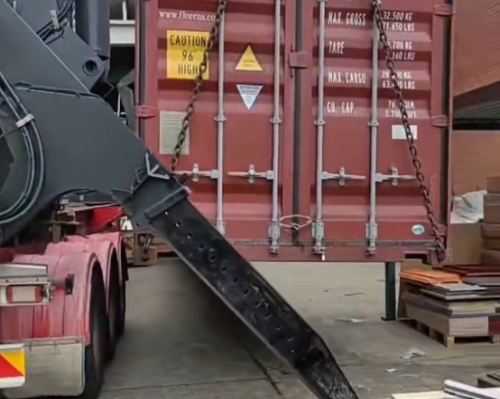
7. Receipt & Confirmation
Upon delivery, the consignee signs for the goods, confirming receipt and the condition of the cargo. Any remaining fees are settled before completing the delivery process.
Understanding the customs clearance and จากบ้านถึงบ้าน delivery process in Australia is essential for smooth international shipments. Ensuring all documents are correctly filed, customs duties are paid, and goods are properly inspected can prevent delays and reduce additional costs.
For hassle-free customs clearance and efficient จากบ้านถึงบ้าน delivery services in Australia, contact BRF LOGISTICS today. We ensure timely, compliant, and cost-effective shipping solutions for your business.