Moving pallets is a crucial part of warehouse, retail, and manufacturing operations. While forklifts are common, they are not always practical or available, especially in small spaces or for temporary setups. Fortunately, there are several smart and safe alternatives to move pallets efficiently without relying on forklifts.
Top 10 Ways to Move Pallets Without a Forklift
When you’re moving pallets without a forklift, you must know what equipment or method to use. Below are the 10 best methods you can use to move your load without using a forklift.
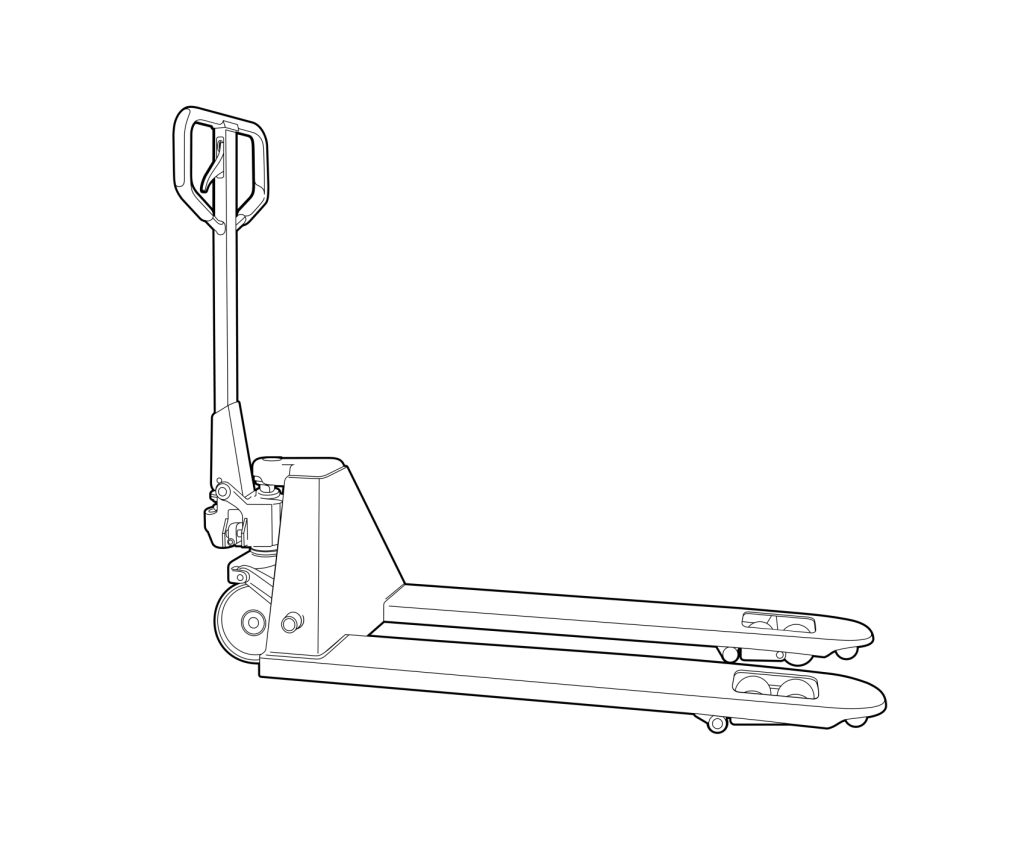
1. Manual Pallet Jacks
Overview:
Manual pallet jacks, also known as hand pallet trucks, are among the most popular alternatives to forklifts. They allow workers to lift and transport pallets with minimal effort.
Benefits:
Affordable and low maintenance
Easy to operate in tight spaces
Can handle heavy loads (typically up to 5,500 lbs or 2,500 kg)
Safety Tips:
Ensure the floor is even and clear of obstacles
Do not overload beyond the jack’s weight capacity
Train staff in proper lifting and handling techniques
2. Electric Pallet Jacks
Overview:
For larger warehouses or heavier pallets, electric pallet jacks provide powered assistance, reducing worker strain and increasing efficiency.
Benefits:
Faster transport of heavy pallets
Less physical strain on operators
Suitable for longer distances within facilities
Safety Tips:
Keep the battery charged and regularly inspected
Follow speed limits to avoid collisions
Use designated pathways in busy areas
3. Pallet Rollers and Conveyor Systems
Overview:
For continuous movement of pallets in production lines or packing areas, pallet rollers or conveyor systems offer hands-free solutions.
Benefits:
Ideal for repetitive tasks
Reduces manual labor and risk of injury
Can integrate with automated warehouse systems
Safety Tips:
Ensure rollers are properly aligned
Keep hands and clothing clear of moving parts
Regularly maintain the conveyor system

4. Skates and Dollies
Overview:
Pallet skates and heavy-duty dollies allow pallets to be rolled across smooth surfaces, providing a simple solution for temporary or small-scale operations.
Benefits:
Low-cost and portable
Quick setup and easy to use
Flexible for various pallet sizes
Safety Tips:
Always check the weight limit of the dolly or skate
Use brakes or chocks when stationary
Move slowly to maintain control
5. Lift Tables and Scissor Lifts
Overview:
Lift tables or scissor lifts can raise pallets to a convenient height for handling or transport, minimizing bending and lifting strain for workers.
Benefits:
Enhances ergonomics and reduces workplace injuries
Can be integrated with other pallet-moving tools
Suitable for loading and unloading operations
Safety Tips:
Never exceed the lift’s weight capacity
Keep the area around the lift clear
Ensure operators are trained in safe lifting practices
6. Roller Crowbars
Overview:
A roller crowbar is a simple but highly effective tool for moving heavy pallets and equipment without the need for forklifts. It combines a lever (crowbar) with a small roller wheel, allowing one person to lift one side of a pallet and easily roll it across smooth surfaces.
Benefits:
Low-cost and portable option for warehouses and workshops
Requires minimal physical effort compared to manual lifting
Ideal for tight spaces where forklifts and pallet jacks cannot operate
Safety Tips:
Always check the weight capacity of the roller crowbar before use
Ensure the floor is level and free of obstacles to avoid tipping
Move slowly and keep a steady balance to maintain control of the load
7. Powered and Manual Stackers
Overview:
Stackers, also known as pallet stackers or walkie stackers, are designed to lift, move, and stack pallets vertically without the need for a forklift. They come in both manual models, operated with hydraulic pumps, and powered versions, which use an electric motor for lifting and movement.
Benefits:
Allows vertical pallet stacking in limited floor space
Manual stackers are affordable and easy to maintain
Powered stackers reduce strain and increase efficiency for heavier loads
Suitable for warehouses, retail stockrooms, and manufacturing facilities
Safety Tips:
Never exceed the stacker’s weight and height limits
Ensure operators are trained in safe lifting and maneuvering
Keep pathways clear and use stackers only on level surfaces
Regularly inspect hydraulic systems (manual) or batteries (powered)
8. Sliding and Rolling Techniques
Overview:
When specialized equipment is not available, simple sliding and rolling methods can be used to move pallets safely. By placing pipes, metal rods, or sturdy rollers underneath a pallet, workers can shift heavy loads by sliding or rolling them across the floor. This method has been used for decades in construction, warehousing, and even by movers handling oversized goods.
Benefits:
Low-cost solution requiring minimal equipment
Useful in temporary worksites or areas with limited access
Can be applied to oversized or irregular loads, not just pallets
Safety Tips:
Always use strong, stable rollers or pipes that can handle the pallet’s weight
Wear gloves and maintain a steady pace to avoid sudden shifts
Ensure the surface is level to prevent uncontrolled movement
Keep multiple workers available for guidance and control when handling heavy loads
9. Gravity Rollers
Overview:
Gravity rollers, also called gravity conveyor systems, are a simple and efficient way to move pallets without forklifts. They rely on a sloped track and gravity to move pallets along a line, making them ideal for warehouses, assembly lines, and loading areas.
Benefits:
Cost-effective compared to powered conveyor systems
Low maintenance, since no motors or electricity are required
Increases productivity in repetitive pallet handling tasks
Can be customized for different pallet sizes and warehouse layouts
Safety Tips:
Ensure the slope is not too steep to avoid uncontrolled pallet movement
Install safety stops or brakes at the end of the roller system
Keep the rollers clean and free of debris for smooth operation
Train workers to handle pallets carefully when loading and unloading
10. Ropes and Sheets
Overview:
For short distances or when no equipment is available, ropes and heavy-duty sheets can be used to move pallets manually. Workers can place the pallet on a strong sheet or tarp and drag it across a smooth floor using ropes for control. While this is not suitable for very heavy or frequent loads, it provides a quick and low-cost solution in emergencies or small operations.
Benefits:
Extremely low-cost and accessible—requires no specialized tools
Useful for moving lighter pallets in tight spaces
Flexible for temporary or outdoor situations where other equipment cannot be used
Safety Tips:
Only use this method for lighter pallets to avoid injury
Ensure the sheet or tarp is strong enough to hold the load without tearing
Use proper lifting posture when pulling ropes to reduce strain
Work in teams when handling heavier loads for added safety and control

Tips for Safely Moving Pallets Without Forklifts
Plan Your Route: Clear obstacles and identify smooth, level surfaces.
Use Proper Techniques: Always push, don’t pull, when possible to reduce strain.
Regular Maintenance: Keep jacks, rollers, and lifts in good condition.
Staff Training: Ensure all employees understand equipment limits and safe operation practices.
Consider Automation: For high-volume operations, conveyors or automated guided vehicles (AGVs) may improve efficiency.
PALLET HANDLING · FREIGHT RECEIVING
Before Moving a Pallet: Choose Equipment for the Actual Task
Moving a pallet across a floor, lowering it from a truck and lifting it into storage are different tasks. A pallet jack may help with floor-level movement, but it does not by itself provide truck-to-ground unloading. Choose the equipment using the loaded pallet dimensions, gross weight, pallet design, surface and handling route.
The example pallet-jack capacity in the original article is not a universal limit or a safe manual-effort threshold. Follow the actual equipment rating and operating instructions, and assess the force needed to start, steer and stop the load. “Push rather than pull” is not an absolute operating rule for every pallet truck; follow its instructions and the site assessment.
Which Equipment Can Move Pallets Without a Forklift?
| Equipment | Task to review | Key limitation |
|---|---|---|
| Manual pallet jack | Short floor-level moves on suitable firm, level surfaces. | Requires compatible pallet openings and manageable operating forces; cannot lower cargo from a truck. |
| Powered pallet truck | Repeated or longer-distance movement using suitable rated equipment. | Requires operator training, adequate maneuvering space and compliance with model-specific instructions. |
| Load-rated pallet lift table | Raising or lowering a compatible load at a workstation. | Platform size, stability and approved use matter; stationary tables do not provide general pallet transport. |
| Pallet stacker | Controlled lifting where pallet design and site conditions are suitable. | Rated capacity varies with lift height and load position; operators need appropriate training. |
| Engineered conveyor or transport skates | Planned industrial handling using compatible, purpose-designed systems. | Requires suitable support, load control and a competent plan; loose pipes are not equivalent equipment. |
| Truck liftgate / tail lift | Vehicle-to-ground transfer for cargo accepted by the carrier. | Platform size, load position and rated capacity limit acceptance; does not automatically include indoor movement. |
Check the pallet base and fork-entry openings before choosing a truck. Do not force forks into an incompatible pallet or assume a crate on skids can be handled like a standard pallet.
How to Receive a Pallet Delivery Without a Forklift or Loading Dock
Tell the freight provider before booking that the receiving address has no forklift or dock. Ask whether a liftgate delivery vehicle is available and whether each individual pallet or crate fits the platform and the carrier’s acceptance rules.
- Provide the external length, width and height of every handling unit, including overhang.
- Provide each unit’s gross weight and photos of the base or pallet.
- Describe road access, parking space, surface condition and any slope.
- Confirm where the driver will place the cargo and how it will be moved afterwards.
- Obtain written confirmation of the accepted equipment and unloading scope.
A Liftgate and a Pallet Jack Perform Different Jobs
A liftgate lowers accepted cargo from the vehicle. A pallet jack then moves a compatible pallet across a suitable surface. Booking one service does not establish that both are included or that the driver will move the cargo into a garage, building or backyard.
Long fence panels, gates, machinery and oversized crates may be unsuitable even when their weight is below the liftgate rating. If the load is not accepted, ask about a suitable dock, warehouse transfer or professionally arranged unloading equipment before dispatch.
Carrier reference: FedEx freight packing guidance explains that liftgate acceptance depends on both size and weight. Its limits are carrier-specific and should not be applied to every delivery provider.
Can You Move Pallets on Gravel, Grass, Ramps or Uneven Ground?
Small pallet-jack wheels need an appropriate running surface. Gravel, grass, broken pavement, thresholds and soft ground can prevent movement or make the load difficult to control. Check the complete path, not just the spot where the truck will unload.
Do not solve an unsuitable route with improvised boards or an unsecured ramp. Arrange a different receiving point or purpose-designed handling solution. Slopes require equipment specifically approved for the conditions and a competent assessment; a standard manual pallet truck should not be assumed suitable.
For narrow entrances, confirm clear width and turning space using the combined load and handling equipment. If the package blocks visibility or cannot be controlled, change the handling arrangement.
Pallet Weight, Stability and Equipment Capacity
Use the gross weight of the complete handling unit, including its pallet and protective packaging. Check the equipment’s capacity for the actual load position and operating conditions, rather than relying on a generic capacity quoted online.
A high mechanical capacity does not mean a person can safely move that weight manually. Floor condition, wheel type, travel distance, frequency and load size affect the effort and control required. Consider a powered option or professional handling when manual movement is unsuitable.
- Inspect the pallet for damage and confirm that it is suitable for the planned handling.
- Check that the load is stable and secured without obstructing the fork openings.
- Keep people clear of the movement route and pinch or crush areas.
- Follow the equipment instructions; do not carry passengers or use the equipment for unintended tasks.
References: HSE pallet safety guidance, HSE guidance on avoiding hazardous manual handling و CCOHS guidance on pushing and pulling handcarts.
Residential Pallet Delivery: Plan Beyond the Curbside Drop
Before Booking
Declare that the address is residential and has no dock or forklift. Share the postcode, access restrictions and individual package details.
Before Arrival
Confirm the appointment, receiving point, unloading equipment and agreed scope. Arrange suitable handling for the movement after the carrier’s delivery point.
At Receipt
Check package count and visible condition. Record damage or shortages on the receipt, retain photographs and notify the relevant parties promptly.
Ask separately about liftgate service, inside delivery, unpacking and packaging removal. A door-to-door freight service does not automatically include these tasks or installation.
For China-origin imports, see BRF door-to-door shipping و شرح رسوم الوجهة to align receiving requirements with the quotation.
Example: A Long Crate of Fence Panels Delivered to a Home
Suppose a crate weighs 500 kg and measures 2.4 m long. These hypothetical details do not establish liftgate suitability: the carrier must also review the footprint, load position and pallet base. The receiving surface and available handling equipment matter as well.
Send dimensions, weight, photographs and address details before shipment. If the carrier cannot accept the crate, review a warehouse transfer or another professional unloading arrangement. Confirm the resulting charges and delivery scope before dispatch. This is a planning example, not a BRF shipment case or an equipment approval.
More FAQs: Pallet Handling and Delivery Without a Forklift
Can a pallet jack unload a pallet from a truck?
A standard pallet jack moves compatible pallets but does not itself lower a load from truck-bed height to ground level. Arrange an approved vehicle-to-ground transfer method.
Can I move a loaded pallet without any equipment?
Do not assume it is a manageable manual task. Arrange appropriate handling equipment or professional assistance rather than improvising a loaded-pallet move.
Is liftgate delivery suitable for every pallet?
No. Acceptance depends on dimensions, gross weight, load position and the actual carrier equipment. Obtain approval for each handling unit before booking.
Can a standard pallet jack work on a gravel driveway?
Do not assume it can. Review an appropriate firm receiving surface or a different handling plan with the delivery provider.
Does DDP shipping include moving the pallet into my house?
Do not assume it does. Agree indoor placement, unloading labour and any other special delivery service separately in the written quotation.
Can I unpack the goods instead of moving the pallet?
Only if the receiving arrangement and cargo allow a planned, safe unpacking process with appropriate handling for individual items. Do not cut restraints from an unstable load or assume the driver provides unpacking labour.
What details does BRF need for delivery without a forklift?
Send the full address and postcode, unit dimensions and gross weights, cargo photos, surface and access details, and available unloading equipment.
Plan Pallet Shipping and Receiving with BRF Logistics
No Forklift at Your Delivery Address? Tell BRF Before Shipping
BRF Logistics can review the freight route and coordinate available delivery options with the destination provider. Confirm liftgate availability, cargo acceptance and the agreed unloading scope before dispatch.
Send: pickup location · destination address and postcode · pallet or crate dimensions · gross weight per unit · package count · photos · access and surface details · available unloading equipment.
Request a Delivery Planquote@brf-logistics.comConclusion:
Moving pallets without forklifts doesn’t have to be slow or unsafe. By leveraging manual and electric pallet jacks, conveyors, skates, dollies, and lifts, businesses can improve efficiency while reducing workplace injuries. Selecting the right equipment depends on your operational needs, pallet weight, and workspace layout.
FAQ Section
Q1: What is the safest way to move pallets without a forklift?
A: Using manual or electric pallet jacks on smooth surfaces is one of the safest methods. Always follow weight limits and proper handling techniques.
Q2: Can pallet dollies handle heavy loads?
A: Yes, heavy-duty dollies and skates can transport pallets weighing several thousand pounds, but it’s important to check the manufacturer’s specifications.
Q3: Are conveyor systems better than pallet jacks?
A: Conveyor systems are ideal for high-volume, repetitive movements, while pallet jacks are more flexible for smaller or irregular operations.
Q4: How can I move pallets safely in tight spaces?
A: Manual pallet jacks or small electric pallet jacks are perfect for narrow aisles. Make sure paths are clear and train staff on maneuvering techniques.
Q5: Is automation worth it for moving pallets without forklifts?
A: For large-scale operations, automated solutions like conveyors or AGVs can improve efficiency and reduce labor costs, but they require higher upfront investment.
From our headquarters in Qingdao, China, BRF Logistics connects your supply chain to trusted office and agent teams across the United States, Canada, Australia, New Zealand, the United Kingdom, and Thailand. Whether you ship by ocean, air, rail, or truck, our network delivers door-to-door reliability, compliant customs clearance, and real-time visibility.
الاتصال السريع: هل تفضل البريد الإلكتروني؟ استخدم quote@brf-logistics.com
فيما يلي التفاصيل الخاصة بكل بلد.

يرجى الاتصال بي في أي وقت للحصول على عرض أسعار!
مقالات ذات صلة