الشحن البحري، الشحن الجوي، التخليص الجمركي، والتسليم من الباب إلى الباب
هل تبحث عن وكيل شحن موثوق به للشحن من الصين إلى نيوزيلندا؟
شركة BRF للخدمات اللوجستية في الصين تقدم خدمات شاملة في مجال الشحن البحري والشحن الجوي والتخليص الجمركي والتنسيق مع هيئة MPI في مجال الأمن الحيوي، بالإضافة إلى خدمات التوصيل من الباب إلى الباب من الصين إلى نيوزيلندا.
سواء كنت تستورد منصة نقالة واحدة، أو عدة أمتار مكعبة من البضائع المجمعة (LCL)، أو حاوية واحدة سعة 20 قدمًا (GP)، أو حاوية واحدة سعة 40 قدمًا (HQ)، أو شحنات تجارية عادية، فإن فريقنا قادر على إدارة عملية النقل بأكملها.
تشمل خدمات الشحن التي نقدمها من الصين إلى نيوزيلندا ما يلي:
- الاستلام من المصنع في أي مكان في الصين
- تجميع الشحنات من عدة موردين
- التخزين في الصين
- تغليف المنتجات المخصصة للتصدير ووضع العلامات عليها
- الإشراف على تحميل الحاويات
- التخليص الجمركي للصادرات الصينية
- حجز الشحن البحري والشحن الجوي
- التخليص الجمركي في نيوزيلندا
- التنسيق بين رسوم الاستيراد وضريبة السلع والخدمات
- تصريح الأمن البيولوجي من معهد ماكس بلانك (MPI)
- ATF أو ترتيبات المرافق الانتقالية
- النقل بالشاحنات المغلقة والتسليم بواسطة الرافعات الجانبية
- التسليم إلى مستودع الشحن الجزئي (LCL)
- خدمة التوصيل من الباب إلى الباب في جميع أنحاء نيوزيلندا
- تأمين البضائع
- تتبع الشحنات وإدارة المستندات
من مصنع المورد الخاص بك في الصين إلى مستودعك أو موقع البناء أو عنوان شركتك أو مركز التوزيع الخاص بك في نيوزيلندا،, شركة BRF للخدمات اللوجستية في الصين يوفر نقطة اتصال واحدة للشحنة بأكملها.
وكيل شحن من الصين إلى نيوزيلندا
إن شحن البضائع دوليًا لا يقتصر على مجرد حجز سفينة أو رحلة جوية.
يجب على المستوردين التنسيق فيما يلي:
- الاستلام من المورد
- الإجراءات الجمركية للتصدير
- الشحن البحري أو الجوي
- وثائق الشحن
- متطلبات الجمارك النيوزيلندية
- متطلبات الأمن البيولوجي الخاصة بمعهد MPI
- مدفوعات الرسوم وضريبة السلع والخدمات
- ترتيبات التسهيلات الانتقالية
- مجموعة الموانئ
- تسليم الحاويات
- إعادة الحاويات الفارغة
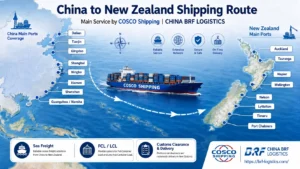
تتعاون شركة «تشاينا BRF لوجيستيكس» مع الموردين وشركات الشحن البحري وشركات الطيران ووكلاء الجمارك ومرافق الأمن البيولوجي والمستودعات وشركات النقل البري المحلية لتقديم حلول نقل متكاملة.
نقدم:
- الشحن من ميناء إلى ميناء
- الشحن من الباب إلى الميناء
- الشحن من الميناء إلى الباب
- الشحن من الباب إلى الباب
- الشحن عبر DAP
- الشحن بنظام «تسليم إلى الوجهة» (DDP) حيثما كان ذلك مناسبًا من الناحيتين التشغيلية والقانونية
- شحن الحاويات في حاويات شحن كاملة (FCL)
- الشحن المجمع بكميات أقل من الحاوية (LCL)
- الشحن الجوي
- نقل البضائع ذات الأحجام الضخمة
الشحن البحري من الصين إلى نيوزيلندا
يُعد الشحن البحري عادةً الطريقة الأكثر فعالية من حيث التكلفة لنقل البضائع التجارية الثقيلة أو الضخمة أو ذات الحجم الكبير من الصين إلى نيوزيلندا.
يُستخدم عادةً في:
- الآلات
- مواد البناء
- صفائح ومقاطع الألمنيوم
- أسوار وبوابات من الألومنيوم
- الأثاث
- قطع غيار السيارات
- المنتجات الشمسية
- المعدات الصناعية
- مواد التغليف
- المنتجات البلاستيكية
- المنسوجات
- الأجهزة
- الهياكل الجاهزة
- المعدات الزراعية
- حاويات الشحن
- البضائع الضخمة الخاصة بالمشاريع
يمكن لشركة «تشاينا BRF لوجيستيكس» ترتيب كلا الأمرين FCL و LCL الشحن البحري من جميع الموانئ الصينية الرئيسية إلى الموانئ في جميع أنحاء نيوزيلندا.
الشحن بالحاويات الكاملة (FCL) من الصين إلى نيوزيلندا
FCL تعني «حمولة حاوية كاملة». يقوم المستورد بحجز حاوية كاملة لشحنة واحدة.
تشمل أنواع الحاويات المتوفرة ما يلي:
| نوع الحاوية | البضائع المناسبة |
|---|---|
| 20GP | البضائع الثقيلة والكثيفة، والمنتجات المعدنية، والآلات، والبلاط |
| 40GP | المنتجات التجارية العامة والبضائع ذات الحجم المتوسط |
| 40HQ | البضائع خفيفة الوزن ولكن ذات الحجم الكبير، والأثاث، ومواد البناء |
| مفتوح من الأعلى | البضائع التي تتطلب التحميل من الأعلى |
| حامل مسطح | الآلات الضخمة وشحنات المشاريع |
| حاوية مبردة | المنتجات التي يتم التحكم في درجة حرارتها |
| حاوية صهريجية | البضائع السائلة المصرح بها |
يُنصح عادةً بإجراء فحص FCL في الحالات التالية:
- حجم الشحنة كبير
- يمكن أن تشغل الشحنة معظم مساحة الحاوية
- المنتجات ثقيلة أو قابلة للكسر
- يرغب المستورد في تقليل عمليات مناولة البضائع
- يمكن تجميع البضائع الواردة من عدة موردين
- تحتاج البضائع إلى فصل وأمن أفضل
- يطلب المستورد تسليم الحاوية إلى مستودع
يمكن لشركة «تشاينا BRF لوجيستيكس» ترتيب استلام البضائع من المصنع، وتجميعها في المستودع، وتحميل الحاويات، والإعلان الجمركي، وحجز الشحن البحري.
كما يمكن توفير صور التحميل، وصور حالة الحاويات، وصور الأختام، وتقارير التحميل.
الشحن بكميات جزئية (LCL) من الصين إلى نيوزيلندا
LCL تعني «حمولة أقل من حاوية كاملة». حيث يتم تجميع البضائع الواردة من عدة مستوردين في حاوية واحدة.
يُعد الشحن بكميات أقل من الحمولة الكاملة (LCL) مناسبًا في الحالات التالية:
- لا يمكن للشحنة أن تملأ حاوية كاملة
- حجم الشحنة صغير نسبيًا
- يرغب المستورد في خفض تكلفة الشحن الأولية
- الشحنة ليست عاجلة للغاية
- يتم تغليف البضائع بشكل آمن لتسهيل عمليات المناولة الإضافية
تُحسب رسوم الشحن الجزئي (LCL) عادةً بناءً على الحجم أو الوزن الخاضع للرسوم، أيهما أكبر.
تتضمن عملية الشحن بنظام LCL ما يلي:
- استلام البضائع من المورد
- التسليم إلى مستودع التجميع
- قياس البضائع ووزنها
- وضع العلامات على الصادرات
- دمج الشحنات مع شحنات أخرى
- التخليص الجمركي للصادرات الصينية
- الشحن البحري
- إلغاء التجميع حسب الوجهة
- التخليص الجمركي في نيوزيلندا والتخليص من قبل وزارة الصناعة الأولية (MPI)
- تسليم البضائع السائبة إلى المستلم
نظرًا لأن الشحنات المجمعة (LCL) تتطلب عمليات تجميع وتفريغ، فإنها تستغرق عادةً وقتًا أطول من الشحن بالحاويات الكاملة (FCL).
الموانئ الرئيسية في الصين
تستطيع شركة «تشاينا BRF لوجيستيكس» استلام البضائع من الموردين في جميع أنحاء الصين واختيار الميناء الأنسب بناءً على موقع المصنع وجدول الرحلات البحرية والوجهة في نيوزيلندا.
ميناء شنغهاي
مناسب للشحنات القادمة من:
- شنغهاي
- سوتشو
- ووشي
- كونشان
- نانتونغ
- تشانغتشو
- نانجينغ
- مناطق أخرى في جيانغسو وآنهوي
ميناء نينغبو
مناسب للشحنات القادمة من:
- نينغبو
- هانغتشو
- ييوو
- شاوشينغ
- تايتشو
- جينهوا
- مناطق التصنيع الأخرى في تشجيانغ
ميناء شينزين
تُستخدم محطات يانتيان وشيكو عادةً لشحن البضائع القادمة من:
- شينزين
- دونغقوان
- هويتشو
- هيويوان
- شرق قوانغدونغ
قوانغتشو وميناء نانشا
مناسب للموردين في:
- قوانغتشو
- فوشان
- تشونغشان
- جيانغمن
- تشاوتشينغ
- غرب قوانغدونغ
ميناء تشينغداو
مناسب للشحنات القادمة من:
- تشينغداو
- ويفانغ
- لينيي
- زيبو
- جينان
- يانتاي
- ريتشاو
- مدن أخرى في شاندونغ
تيانجين شينغانغ
مناسب للشحنات القادمة من:
- بكين
- تيانجين
- هيبي
- شانشي
- منغوليا الداخلية
ميناء شيامن
مناسب للبضائع المصنعة في:
- شيامن
- تشوانتشو
- تشانغتشو
- فوتشو
- مناطق أخرى في فوجيان
ميناء داليان
يُستخدم بشكل متكرر لنقل البضائع القادمة من لياونينغ ومناطق أخرى في شمال شرق الصين.
الموانئ الرئيسية في نيوزيلندا
يمكن أن يؤدي اختيار ميناء الوجهة الصحيح إلى خفض تكاليف النقل البري بالشاحنات، ووقت العبور، وعمليات مناولة الحاويات غير الضرورية.
ميناء أوكلاند
تُعد أوكلاند أكبر ميناء استيراد في نيوزيلندا وإحدى أهم بوابات دخول السلع الاستهلاكية ومواد البناء والآلات والبضائع التجارية العامة.
عادةً ما تكون أوكلاند وجهة مناسبة للتوصيل إلى:
- المنطقة التجارية المركزية في أوكلاند
- إيست تاماكي
- بنروز
- مانوكاو
- ويري
- جبل ويلينغتون
- ألباني
- هيندرسون
- وانغاري
- هاميلتون
- الوجهات في شمال الجزيرة الشمالية وأعاليها
يمكن توصيل البضائع التي تصل إلى أوكلاند بواسطة شاحنة حاويات، أو شاحنة ذات رافعة جانبية، أو شاحنة ذات رافعة متأرجحة، أو شاحنة مسطحة، أو شاحنة توصيل LCL قياسية.
ميناء تاورانجا
يُعد ميناء الحاويات في تاورانجا أكبر ميناء للحاويات في نيوزيلندا، حيث يتولى مناولة ما يقارب 41% من حاويات الشحن في البلاد. ويرتبط الميناء بشبكة طرق وسكك حديدية تربطه بأوكلاند وهاميلتون ووايكاتو ووسط الجزيرة الشمالية.
غالبًا ما تكون تاورانجا وجهة مناسبة للتوصيل إلى:
- تاورانجا
- جبل ماونغانوي
- روتوروا
- هاميلتون
- وايكاتو
- خليج بلنتي
- جنوب أوكلاند
- وسط الجزيرة الشمالية
كما يمكن نقل الحاويات التي يتم تفريغها في تاورانجا بالسكك الحديدية إلى ميناء متروبورت أوكلاند، الواقع في المنطقة الصناعية بمدينة أوكلاند.
ميناء ليتلتون
ليتلتون هو أكبر ميناء في الجزيرة الجنوبية لنيوزيلندا، ويُعد البوابة الرئيسية للحاويات في كرايستشيرش وكانتربري.
وهي مناسبة للتسليم إلى:
- كريستشيرش
- رولستون
- هورنبي
- رانجيورا
- Ashburton
- Canterbury
- Other central South Island destinations
CentrePort Wellington
CentrePort serves Wellington and central New Zealand and provides container receiving, delivery, reefer monitoring and inland freight services.
It is suitable for:
- ويلينغتون
- Lower Hutt
- Upper Hutt
- Porirua
- Palmerston North
- Manawatū
- Lower North Island destinations
Port of Napier
Napier is an important regional port for Hawke’s Bay and surrounding agricultural and industrial areas.
It can serve:
- نابير
- Hastings
- Hawke’s Bay
- Gisborne
- Central-eastern North Island
Port Nelson
Nelson is suitable for cargo serving:
- نيلسون
- Richmond
- Tasman
- Marlborough
- Northern South Island
Port Chalmers
Port Chalmers is the main container gateway for Dunedin and the lower South Island.
It can serve:
- Dunedin
- Otago
- Invercargill
- Southland
Port of Timaru
Timaru provides container access for South Canterbury and nearby regions. Its container terminal is connected to wider international services through New Zealand’s coastal and port networks.
Shipping Lines from China to New Zealand
The most suitable shipping line depends on:
- Port of loading in China
- New Zealand destination port
- Direct or transshipment service
- Container type
- Equipment availability
- Vessel departure date
- Transit time
- Freight rate
- Peak-season capacity
- Free-time requirements
Shipping lines commonly considered for China-to-New Zealand container shipments include:
Maersk
Maersk operates New Zealand ocean and coastal connections.
Its Northern Star service currently connects Shanghai and Hong Kong with New Zealand ports including Auckland, Nelson, Timaru, Port Chalmers, Napier and Tauranga, via Brisbane. The published rotation changed to Shanghai Yangshan in May 2026.
COSCO Shipping
COSCO has an established New Zealand network and participates in regular liner services calling at Auckland, Tauranga, Wellington, Napier and Lyttelton.
OOCL
OOCL works within the COSCO group network and provides services involving major New Zealand ports.
COSCO and OOCL began weekly Wellington calls in September 2025 on a service that also calls at Auckland and Tauranga.
MSC
MSC provides services to New Zealand through its Oceania and regional networks.
CentrePort Wellington reported that MSC commenced regular Wellington calls through its Noumea service in July 2025.
CMA CGM and ANL
CMA CGM and its Oceania brand ANL provide services connecting China, Southeast Asia, Australia and New Zealand.
Depending on the departure port, cargo may move through direct services or transshipment hubs such as Singapore and Australian ports.
ONE
Ocean Network Express provides booking and network coverage between East Asia and Oceania through direct and connecting services.
PIL
Pacific International Lines may be available for selected China, Southeast Asia and New Zealand routings, depending on the port and sailing schedule.
CHINA BRF LOGISTICS does not use one fixed carrier for every shipment. We compare the available carriers according to cost, transit time, equipment availability and the final delivery location.
Carrier rotations and port calls can change. The final route should always be confirmed when the booking is made.
Estimated Sea Freight Transit Time
The following figures are general planning estimates and are not guaranteed vessel schedules.
| ميناء الصين | Auckland or Tauranga | South Island Ports |
|---|---|---|
| Shenzhen / Guangzhou | 16–25 days | 20–32 days |
| شيامن | 17–26 days | 21–32 days |
| نينغبو | 18–27 days | 22–34 days |
| شنغهاي | 18–28 days | 22–35 days |
| تشينغداو | 21–32 days | 25–38 days |
| تيانجين | 24–35 days | 28–42 days |
| داليان | 25–36 days | 29–43 days |
Actual transit time depends on:
- Direct or transshipment service
- Carrier rotation
- Port congestion
- Weather
- Container availability
- Vessel schedule changes
- Customs inspection
- MPI biosecurity processing
- Destination port
- LCL deconsolidation time
Door-to-door sea freight usually takes longer than port-to-port transit because it also includes factory pickup, export clearance, destination clearance and final delivery.
Air Freight from China to New Zealand
Air freight is suitable for urgent, lightweight, valuable or time-sensitive cargo.
CHINA BRF LOGISTICS can arrange air cargo from:
- Shanghai Pudong Airport
- Guangzhou Baiyun Airport
- Shenzhen Bao’an Airport
- Beijing Capital Airport
- Qingdao Jiaodong Airport
- Zhengzhou Xinzheng Airport
- Xiamen Gaoqi Airport
- Hong Kong International Airport
New Zealand’s main international air cargo gateways include:
- Auckland Airport
- Christchurch Airport
- Wellington Airport
Air New Zealand Cargo operates dedicated international cargo terminals in Auckland, Wellington and Christchurch.
Auckland is the primary international air-cargo gateway and handled approximately 89% of New Zealand’s international air cargo according to Auckland Airport’s 2025 reporting.
Air freight is commonly used for:
- الإلكترونيات
- Replacement parts
- Samples
- Medical equipment
- Automotive components
- E-commerce products
- Fashion products
- Valuable machinery parts
- Urgent production materials
Typical air-freight transit estimates are:
- Airport to airport: approximately 3–7 days
- Door to door: approximately 5–10 days
- Express courier: approximately 3–6 days
The final time depends on airline capacity, flight routing, customs clearance and MPI inspection requirements.
New Zealand Import GST
New Zealand applies a standard 15% Goods and Services Tax to imported goods.
New Zealand Customs calculates import GST based on the combined value of:
- The price paid for the goods
- الشحن الدولي
- تأمين البضائع
- Applicable import duty
New Zealand Customs generally does not collect duty or GST at the border when the shipment value is NZ$1,000 or less, although different rules can apply to goods such as alcohol and tobacco, and overseas suppliers may collect GST on low-value goods.
Import GST Calculation
The general calculation is:
GST = 15% × (Customs Value + International Freight + Insurance + Import Duty)
For example:
| Cost Component | Example |
|---|---|
| Customs value of goods | NZ$20,000 |
| International freight and insurance | NZ$3,000 |
| Import duty | NZ$0 |
| GST taxable value | NZ$23,000 |
| Import GST at 15% | NZ$3,450 |
This is a simplified example. Customs valuation, exchange rates, levies and product-specific charges must be checked for the actual shipment.
Import Duty and China–New Zealand FTA
Import duty depends on:
- HS code
- Product type
- Material
- Manufacturing method
- Country of origin
- Intended use
- Preferential tariff eligibility
- Trade-remedy measures
Some Chinese-origin products may qualify for preferential tariff treatment under the New Zealand–China Free Trade Agreement.
A New Zealand importer may claim tariff preference using:
- A certificate of origin
- A declaration of origin
- Other acceptable evidence proving that the goods comply with the relevant rules of origin
The importer must retain enough evidence to support the claim if requested by New Zealand Customs.
A zero-duty rate does not automatically mean that no import charges are payable. Import GST, Customs levies, MPI levies, port charges and brokerage fees may still apply.
New Zealand Customs Clearance
Commercial imports into New Zealand normally require coordination with New Zealand Customs and, where applicable, the Ministry for Primary Industries.
The customs-clearance process normally includes:
- Reviewing the commercial invoice
- Reviewing the packing list
- Confirming the HS code
- Confirming the customs value
- Checking the importer’s Customs Number
- Lodging the import declaration
- Assessing import duty
- Calculating 15% GST
- Paying applicable levies
- Obtaining Customs release
- Completing MPI requirements
- Arranging port collection and delivery
Goods valued at NZ$1,000 or more normally require the importer to obtain a New Zealand Customs Number. A customs broker can apply for this on the importer’s behalf.
Documents Required
Common documents include:
- الفاتورة التجارية
- قائمة التعبئة
- Bill of lading
- Air waybill
- Arrival notice
- Importer Customs Number
- HS code
- Certificate of origin
- Insurance certificate
- Import permit, if required
- Treatment or fumigation certificate
- Manufacturer’s declaration
- Material Safety Data Sheet
- Dangerous-goods declaration
- Product-compliance documents
Product descriptions should be specific.
Instead of writing only “parts” or “materials,” the invoice should show information such as:
- Aluminium fence panels
- Powder-coated aluminium profiles
- Steel machinery parts
- Plastic packaging film
- Wooden furniture
- Electrical control components
Accurate documents reduce clearance questions and classification disputes.
MPI Biosecurity Clearance
New Zealand has strict biosecurity controls.
MPI may check imported containers and cargo for:
- Soil
- Mud
- Seeds
- Leaves
- Insects
- Plant material
- Animal material
- Contaminated water
- Untreated wooden packaging
- Other unwanted organisms
Cargo that may receive additional attention includes:
- Wooden products
- Wooden crates and pallets
- Used machinery
- Used vehicles
- المعدات الزراعية
- Outdoor furniture
- Food products
- Plant and animal products
- Used shipping containers
- Natural-fibre products
Wooden packaging should comply with applicable ISPM 15 treatment and marking requirements.
Containers, machinery and cargo should be clean before departure from China. If contamination is found, MPI may require:
- Inspection
- Cleaning
- Treatment
- Fumigation
- Pest identification
- Re-export
- Destruction
The importer is normally responsible for the resulting inspection, treatment, storage and transportation costs.
Does the New Zealand Warehouse Need ATF Approval for Container Delivery?
This is one of the most important questions for FCL shipments to New Zealand.
In New Zealand, the official MPI term is generally Transitional Facility, commonly referred to in the logistics industry as an approved transitional facility or ATF.
MPI states that containers arriving in New Zealand must go to a transitional facility to be packed or unpacked. The facility may be located at the port, at a third-party warehouse or at another location approved by MPI.
Can a Container Be Dropped at the Importer’s Warehouse?
A full import container generally cannot simply be delivered and unpacked at any ordinary warehouse.
The warehouse address must normally meet one of the following conditions:
Option 1: The Warehouse Is an MPI-Approved Transitional Facility
The importer’s warehouse may receive and unpack containers if it has the appropriate MPI transitional-facility approval for the relevant container and cargo type.
A transitional facility receiving containers must normally have:
- An MPI-approved facility operator
- An MPI-approved accredited person
- Appropriate operating procedures
- A suitable container-unpacking area
- Biosecurity-control procedures
- A process for reporting contamination
- MPI approval for the relevant goods
An accredited person is responsible for checking containers, supervising unpacking and controlling any biosecurity risks found during the process.
Option 2: Use a Multi-Site Transitional Facility System
For eligible low-risk sea containers, an importer may use an authorised Multi-Site Transitional Facility system.
This can allow the container to be delivered to the importer’s business without the importer operating its own permanent transitional facility.
The site must meet specified conditions, which can include:
- A suitable concrete hardstand
- Enough space around the container for inspection
- A clean and secure unpacking area
- Cargo that is not subject to a separate Import Health Standard
- Supervision and compliance through an authorised MTF provider
MPI states that the MTF system is an alternative for importers receiving low-risk sea containers who do not want their own transitional facility.
Option 3: Unpack at a Third-Party Transitional Facility
When the customer’s warehouse is not approved and the shipment is not eligible for an MTF arrangement, the container can be transferred to an approved third-party transitional facility.
The process is:
- Container is collected from the port
- Container is delivered to the approved transitional facility
- An accredited person supervises the container opening
- Cargo is unpacked
- MPI requirements are completed
- Cleared loose cargo is loaded onto a local truck
- Cargo is delivered to the customer’s warehouse
This option avoids requiring the customer to apply for its own transitional-facility approval.
Important ATF Information Required Before Shipping
Before booking a full container to New Zealand, the importer should provide:
- Complete warehouse address
- New Zealand postcode
- Contact person
- Confirmation of whether the address is an approved transitional facility
- Transitional-facility number, if available
- Type of cargo the facility is approved to receive
- Confirmation of whether an accredited person is available
- Whether the container will be live-unloaded or dropped
- Whether a sideloader can access the site
- Site opening hours
- Empty-container return arrangements
The selected facility should be nominated before the container arrives. The final delivery and unpacking instructions must follow the MPI biosecurity direction issued for the shipment.
Container Truck Delivery in New Zealand
After Customs and MPI requirements are completed, CHINA BRF LOGISTICS can arrange container transport from the destination port or transitional facility.
Sideloader or Swing-Lift Delivery
A sideloader lifts the container from the trailer and places it on the ground beside the truck.
This is suitable when:
- The customer needs time to unload
- There is enough level space
- The site can accommodate the truck
- The container can be placed close to the unloading area
- The warehouse has the necessary MPI or MTF arrangement
Live Unloading
The container remains on the trailer while the customer unloads the cargo.
This option is suitable when:
- A forklift and labour are ready
- Unloading can be completed quickly
- The site does not have space to leave the container
- The trucking company provides a suitable free unloading period
Waiting charges may apply when unloading takes longer than the agreed time.
Drop-and-Return Delivery
The container is dropped at the warehouse and collected later.
This requires:
- Sufficient space
- Suitable ground conditions
- Approval from the trucking company
- Compliance with MPI delivery requirements
- Confirmation of container free time
- A confirmed empty-container return depot
Container-Site Requirements
Before delivery, the importer should confirm:
- Is the road suitable for a heavy truck?
- Are there any narrow entrances?
- Are there low power lines or trees?
- Is the ground level and stable?
- Is there space for the truck to turn?
- Is the delivery address commercial or residential?
- Is a forklift available?
- Is a crane or Hiab required?
- Can the container be placed on the ground?
- Is the site an approved TF or eligible MTF site?
Additional charges may apply for difficult-access locations, waiting time, redelivery, rural transport, sideloader use or unsuccessful delivery.
LCL and Air-Freight Delivery
LCL and air cargo are normally delivered as loose cargo after customs and MPI clearance.
Available delivery vehicles may include:
- Courier vans
- Standard box trucks
- Tail-lift trucks
- Flatbed trucks
- Hiab crane trucks
- Refrigerated trucks
- Heavy-load vehicles
For commercial deliveries, the consignee should confirm:
- Whether a forklift is available
- Whether a loading dock is available
- Whether tail-lift service is required
- Maximum pallet weight
- Warehouse receiving hours
- Contact telephone number
- Delivery-booking requirements
Door-to-Door Shipping from China to New Zealand
Our door-to-door service can include:
- Supplier pickup in China
- Delivery to the China warehouse
- Cargo inspection and measurement
- Consolidation from multiple suppliers
- تغليف المنتجات المخصصة للتصدير ووضع العلامات عليها
- China customs declaration
- Ocean or air-freight booking
- التخليص الجمركي في نيوزيلندا
- Duty and GST coordination
- MPI clearance
- Transitional-facility arrangements
- مجموعة الموانئ
- Container or loose-cargo delivery
- إعادة الحاويات الفارغة
Delivery can be arranged to:
- أوكلاند
- هاميلتون
- تاورانجا
- روتوروا
- ويلينغتون
- Palmerston North
- نابير
- Hastings
- كريستشيرش
- نيلسون
- تيمارو
- Dunedin
- Invercargill
- Other regional and rural destinations
DDP and DAP Shipping
DAP Shipping
Under a DAP arrangement, CHINA BRF LOGISTICS transports the cargo to the agreed New Zealand address.
The consignee generally remains responsible for:
- Acting as importer of record
- Import customs clearance
- Import duty
- GST
- MPI charges
- Other local import costs
الشحن بنظام DDP
Where legally and operationally suitable, a DDP-style service may include:
- الاستلام من المصنع
- التخليص الجمركي للصادرات الصينية
- الشحن الدولي
- New Zealand customs brokerage
- Import duty
- GST
- MPI processing
- Transitional-facility handling
- التسليم النهائي
Before accepting DDP terms, the importer-of-record structure, GST treatment, product compliance and customs responsibilities must be reviewed.
DDP is not automatically available for every commodity or consignee.
Shipping Cost from China to New Zealand
The final shipping cost depends on:
- Supplier pickup address
- Port of loading
- New Zealand destination port
- Cargo weight
- Cargo volume
- FCL or LCL
- Container type
- Air or sea freight
- Selected carrier
- Direct or transshipment service
- Peak-season surcharges
- Import duty
- 15% GST
- Customs and MPI levies
- Biosecurity inspection
- Transitional-facility charges
- Container trucking
- Delivery postcode
- Sideloader requirements
- Container waiting time
- Empty-container return location
Importers should compare the total landed cost rather than only the basic ocean-freight rate.
A low port-to-port rate may still involve high destination charges, inspection fees, warehouse handling or inland-delivery costs.
Information Required for a Freight Quote
To receive an accurate quotation, please provide:
- اسم المنتج
- Detailed cargo description
- رمز HS، إن وُجد
- Number of cartons or pallets
- Total gross weight
- Carton or pallet dimensions
- Total cargo volume
- Supplier pickup address
- Cargo-ready date
- Port of departure, if known
- New Zealand destination port
- Final delivery address and postcode
- Commercial or residential delivery
- FCL, LCL or air-freight preference
- Declared cargo value
- Incoterm
- Packaging photographs
- Dangerous-goods information
- Import-permit information
- Confirmation of whether the warehouse is an approved TF or uses an MTF system
For full-container shipments, please also confirm whether the customer requires:
- Live unloading
- Sideloader delivery
- Container drop
- Third-party ATF unpacking
- Loose-cargo delivery after unpacking
Why Choose CHINA BRF LOGISTICS?
Complete China-to-New Zealand Service
We coordinate pickup, warehousing, customs clearance, freight, biosecurity processing and final delivery.
Coverage Across China
We can collect cargo from suppliers throughout China and route it through the most suitable port or airport.
Multiple Carrier Options
We compare different shipping lines according to schedule, price, transit time and destination-port coverage.
FCL, LCL and Air Freight
Importers can select the service that best matches their cargo volume, delivery schedule and budget.
Multiple-Supplier Consolidation
Products from several Chinese factories can be consolidated into one LCL or FCL shipment.
الإشراف على التحميل
We can provide loading photographs, seal photographs and container-loading reports.
New Zealand Customs and MPI Coordination
We work with local service partners to coordinate Customs, GST, MPI and transitional-facility requirements.
Nationwide Truck Delivery
We can arrange container and loose-cargo delivery throughout the North and South Islands.
الأسئلة الشائعة
How long does shipping from China to New Zealand take?
Sea freight generally takes approximately 16–35 days port to port, depending on the departure port, destination port and transshipment arrangement.
Air freight usually takes approximately 3–7 days airport to airport.
What is the cheapest way to ship from China to New Zealand?
LCL sea freight is generally suitable for small shipments, while a full 40HQ container usually provides a better unit cost for high-volume cargo.
Which New Zealand port should I use?
Auckland and Tauranga are the main North Island gateways.
Lyttelton is usually suitable for Christchurch and Canterbury, while Wellington, Napier, Nelson, Timaru and Port Chalmers can serve their respective regions.
Which shipping lines operate to New Zealand?
Available carriers may include Maersk, COSCO, OOCL, MSC, CMA CGM, ANL, ONE and PIL.
The available service depends on the Chinese departure port, destination port and sailing date.
Is import GST charged in New Zealand?
Yes. New Zealand normally applies 15% GST to imported goods.
GST is generally calculated on the customs value plus international freight, insurance and applicable duty.
Do Chinese goods qualify for zero duty?
Some goods may qualify for preferential tariff treatment under the New Zealand–China Free Trade Agreement if they comply with the relevant rules of origin.
GST and other import charges may still apply.
Does my warehouse need ATF approval?
If an uncleared import container will be delivered and unpacked at the warehouse, the site normally needs to be an approved transitional facility or operate under an eligible MTF arrangement.
Otherwise, the container should be unpacked at a third-party approved transitional facility before the loose cargo is delivered.
Can the container be dropped at my warehouse?
Yes, provided that:
- MPI requirements are satisfied
- The address is approved or covered by an eligible arrangement
- The site is accessible
- The ground is suitable
- The trucking company can provide sideloader service
- Container free time and return arrangements are confirmed
Can you arrange a third-party ATF?
Yes. When the consignee’s warehouse is not approved, we can coordinate delivery to an approved transitional facility for unpacking and then arrange loose-cargo delivery.
Can you deliver containers anywhere in New Zealand?
We can arrange delivery to most commercial and regional destinations, subject to trucking availability, access conditions and MPI requirements.
Can you consolidate goods from several suppliers?
Yes. Cargo from different Chinese suppliers can be collected, checked and consolidated into one shipment.
Can you ship oversized machinery?
Yes. Open-top containers, flat racks, special equipment and breakbulk services can be arranged according to the cargo dimensions and weight.
Do you provide cargo insurance?
Yes. Cargo insurance can be arranged based on the cargo value, product type and required coverage.
Get a Quote for Shipping from China to New Zealand
Whether you need air freight, LCL shipping, a 20GP container, a 40HQ container or complete door-to-door delivery, CHINA BRF LOGISTICS can prepare a suitable transportation solution.
Please send us:
- Product description
- Cargo quantity
- Weight and dimensions
- Supplier address
- New Zealand destination
- Delivery postcode
- Cargo-ready date
- طريقة الشحن المفضلة
- ATF or warehouse information
CHINA BRF LOGISTICS — Your Reliable Freight Forwarder from China to New Zealand.