Frequently Asked Questions for European Importers
1. What is PPWR?
PPWR stands for the Packaging and Packaging Waste Regulation.
It is the European Union’s new regulatory framework covering packaging and packaging waste.
The regulation generally started to apply from 12 August 2026, although many individual requirements have different implementation dates and transition periods.
PPWR focuses on areas such as:
- packaging reduction;
- recyclability;
- recycled content;
- reusable packaging;
- packaging labelling;
- technical documentation;
- producer responsibility.
For European importers, this means packaging compliance should increasingly be considered alongside normal product and customs compliance.
2. Does PPWR mean I can no longer import products from China in normal cartons?
不。.
PPWR does not mean that all existing cartons or packaging automatically became illegal on 12 August 2026.
Different requirements are introduced at different stages.
The correct approach is to check:
What type of packaging is being used?
What material is it made from?
Which PPWR requirements currently apply to that packaging?
What requirements will apply in the future?
The regulation should therefore be treated as a long-term packaging compliance framework rather than a one-day packaging ban.
3. Does PPWR affect DDP shipments from China to Europe?
Yes.
PPWR does not change the basic meaning of DDP, but it adds another compliance consideration to European imports.
Traditionally, customers often looked at DDP as:
Freight + Customs Clearance + Duty + VAT + Final Delivery
Today, we recommend looking at European DDP as:
Logistics + Customs + Tax + Product Compliance + Packaging Compliance
The shipping arrangement and the packaging compliance responsibilities should be checked separately.
4. If I buy goods from China under DDP terms, does that mean all EU compliance is handled by the Chinese supplier?
Not necessarily.
This is one of the most important points to understand.
DDP is an Incoterm.
It defines responsibilities between the seller and buyer for transportation, customs clearance, costs and risk.
It does not automatically remove regulatory obligations arising under EU legislation.
For example, DDP does not automatically determine or solve:
- PPWR responsibilities;
- EPR obligations;
- CE compliance;
- REACH compliance;
- CBAM obligations;
- product safety requirements;
- packaging registration;
- local tax obligations.
These matters must be reviewed separately.
5. Who is the importer in a DDP shipment?
This must be clearly established before the goods are shipped.
The following parties should not automatically be treated as the same entity:
Freight Forwarder
Customs Broker
Customs Declarant
Importer
买方
A freight forwarder may arrange transportation.
A customs broker may submit the customs declaration.
But the importer is the legal economic operator associated with the import transaction.
For a professional DDP shipment, the importer structure should be confirmed before departure from China.
6. Can BRF SHIPPING automatically act as my EU importer?
You should never assume that a freight forwarder automatically becomes the importer simply because the shipment is quoted as DDP.
The importer arrangement depends on the specific transaction, destination country, customs structure and legal setup.
Before shipping, we recommend confirming:
- importer name;
- importer address;
- EORI;
- VAT arrangement;
- customs representative;
- product compliance responsibilities.
BRF SHIPPING can coordinate the logistics and customs process, but the legal importer structure should always be confirmed for each shipment.
7. What is an EORI number and why is it important?
EORI stands for:
Economic Operators Registration and Identification.
It is an identification number used for EU customs procedures.
For an import shipment, the appropriate customs parties and EORI structure should be confirmed before the goods arrive in Europe.
A DDP quote should therefore not simply say:
Customs clearance included.
A professional solution should also establish:
Who is importing the goods?
Which EORI will be used?
Who will submit the customs declaration?
8. Does DDP automatically include import VAT?
DDP normally places import-clearance responsibilities on the seller under the Incoterm, but the actual VAT treatment still depends on the legal and tax structure of the transaction.
Therefore, before shipment we recommend confirming:
- destination country;
- importer;
- VAT number;
- customs value;
- applicable VAT rate;
- who pays import VAT;
- whether import VAT can be recovered;
- local tax requirements.
European customers should not treat the phrase “VAT included” as a substitute for understanding the actual tax structure.
9. What packaging information should I request from my Chinese supplier?
We recommend requesting a basic EU Packaging File.
It should ideally include:
Packaging Type
例如:
carton, plastic bag, stretch film, wooden pallet, foam, metal packaging or composite packaging.
Packaging Material
例如:
paper, plastic, wood, metal or mixed material.
Packaging Weight
Where possible, the packaging weight should be recorded separately from the product net weight.
Packaging Supplier or Manufacturer
The company producing or supplying the packaging.
Available Supporting Documents
例如:
material specification, supplier declaration, composition information and relevant technical documentation.
This creates a much better compliance record than simply stating:
Packed in export cartons.
10. Why is packaging weight important?
Packaging waste obligations and producer-responsibility systems are often linked to the amount and type of packaging placed on a market.
For this reason, European importers should increasingly know not only:
How much does the product weigh?
but also:
How much does the packaging weigh?
It is useful to separate:
Product Net Weight
from:
Packaging Weight
when building your import documentation.
11. Is PPWR the same as EPR?
不。.
They are closely related, but they are not exactly the same.
PPWR is the broader EU regulatory framework covering packaging and packaging waste.
EPR means:
Extended Producer Responsibility.
EPR focuses on the responsibility of producers or other relevant economic operators for products and packaging placed on a market.
A company can therefore have both:
PPWR compliance considerations
and:
EPR registration or reporting obligations.
12. If my goods are shipped DDP, is EPR automatically included?
不。.
DDP does not automatically include EPR registration or EPR compliance.
This should be checked separately.
Responsibility can depend on factors such as:
- the destination country;
- the seller;
- the importer;
- the type of product;
- the packaging;
- the sales model;
- whether the goods are B2B or B2C;
- whether the Chinese seller sells directly to European consumers.
This is especially important for cross-border e-commerce.
13. I am a European distributor importing products from China. What should I check before shipping?
Before the goods leave China, we recommend checking at least the following:
产品
What exactly are you importing?
HS / CN Code
Has the customs classification been confirmed?
Customs Value
Is the commercial value correct?
Importer
Which legal entity is importing the goods?
EORI
Which EORI number will be used?
增值税
How will import VAT be handled?
Product Compliance
Does the product require CE, REACH, CBAM or other compliance documentation?
包装
What materials are being used?
PPWR
Are there relevant packaging requirements?
EPR
Does packaging or producer registration apply?
配送
Are there special warehouse or truck-delivery requirements?
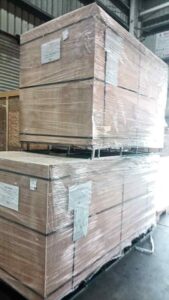
14. Does PPWR affect wooden pallets?
Potentially, yes, because pallets are packaging.
However, PPWR compliance is not the only issue.
For wooden packaging used in international transport, phytosanitary requirements such as ISPM 15 may also be relevant.
Therefore, when shipping from China to Europe using wooden pallets or wooden crates, packaging should be assessed from both:
transport / phytosanitary compliance
and:
EU packaging compliance
perspectives.
15. Does PPWR affect plastic wrapping and stretch film?
Plastic transport packaging can fall within the packaging regulatory framework.
Companies should therefore start keeping better records for items such as:
- stretch film;
- plastic bags;
- shrink wrap;
- protective plastic packaging;
- plastic straps;
- other plastic transport packaging.
The exact requirement depends on the packaging type and applicable implementation date.
16. Will customs stop my cargo because of PPWR?
Not every shipment will suddenly be stopped because of PPWR.
However, the direction of EU regulation is toward stronger documentation, traceability and compliance responsibilities.
That means European importers should avoid waiting until a customs authority or market-surveillance authority asks for documentation.
A better approach is:
Prepare the compliance information before shipment.
17. What is the biggest mistake European buyers make with DDP?
One of the biggest mistakes is assuming:
“My supplier quoted DDP, therefore I do not need to care about customs or compliance.”
DDP is extremely useful, but it should be transparent.
You should still understand:
- who the importer is;
- which EORI is being used;
- how customs value is declared;
- how duty is calculated;
- how VAT is handled;
- whether product compliance is complete;
- whether packaging compliance applies.
A cheap DDP price without a clear import structure can create much larger problems later.
18. What should a professional Europe DDP service include?
We believe a professional European DDP solution should be built around five areas.
1. Transportation
Factory pickup in China, international freight and European final delivery.
2. Customs
HS code, customs declaration, customs duty and inspections.
3. Tax
Import VAT and related tax arrangements.
4. Product Compliance
CE, REACH, CBAM and other product-specific requirements where applicable.
5. Packaging Compliance
PPWR, packaging documentation, EPR and producer responsibilities where applicable.
This is much more complete than simply quoting:
Ocean Freight + Duty + VAT.
19. What information should I send BRF SHIPPING for a DDP quotation?
To prepare a more accurate China-to-Europe DDP solution, please provide:
产品名称
HS code, if available
货物价值
数量
毛重
CBM / dimensions
Packaging type
Pickup address in China
Final delivery address in Europe
Company or importer information
Any existing CE, REACH or other compliance documents
With this information, the shipment structure can be evaluated before the goods leave China.
20. Can BRF SHIPPING help with PPWR compliance?
BRF SHIPPING’s primary role is international logistics, customs coordination and door-to-door transportation.
For shipments where packaging or other regulatory requirements may apply, we can help identify the compliance points that should be checked before shipping and coordinate the logistics process around the required documentation.
Where specialist legal, tax, EPR or product-compliance advice is required, the relevant qualified service provider should be involved.
Our goal is simple:
Identify potential problems before the cargo leaves China, rather than after it reaches European customs.
Final Answer for European Customers
If you are importing goods from China into Europe under DDP terms, the most important message is this:
DDP is a logistics and trade arrangement — it is not a replacement for EU compliance.
Before shipping, make sure the following are clear:
Importer
EORI
增值税
Customs
Product Compliance
PPWR
EPR
Packaging Documentation
A well-structured DDP shipment should make all of these responsibilities transparent.
BRF航运
China to Europe Logistics
Sea Freight | Air Freight | Customs Clearance | DDP | Door-to-Door
Logistics + Customs + Tax + Compliance